
Air Conditioner Leaking Water? What to Do Right Now
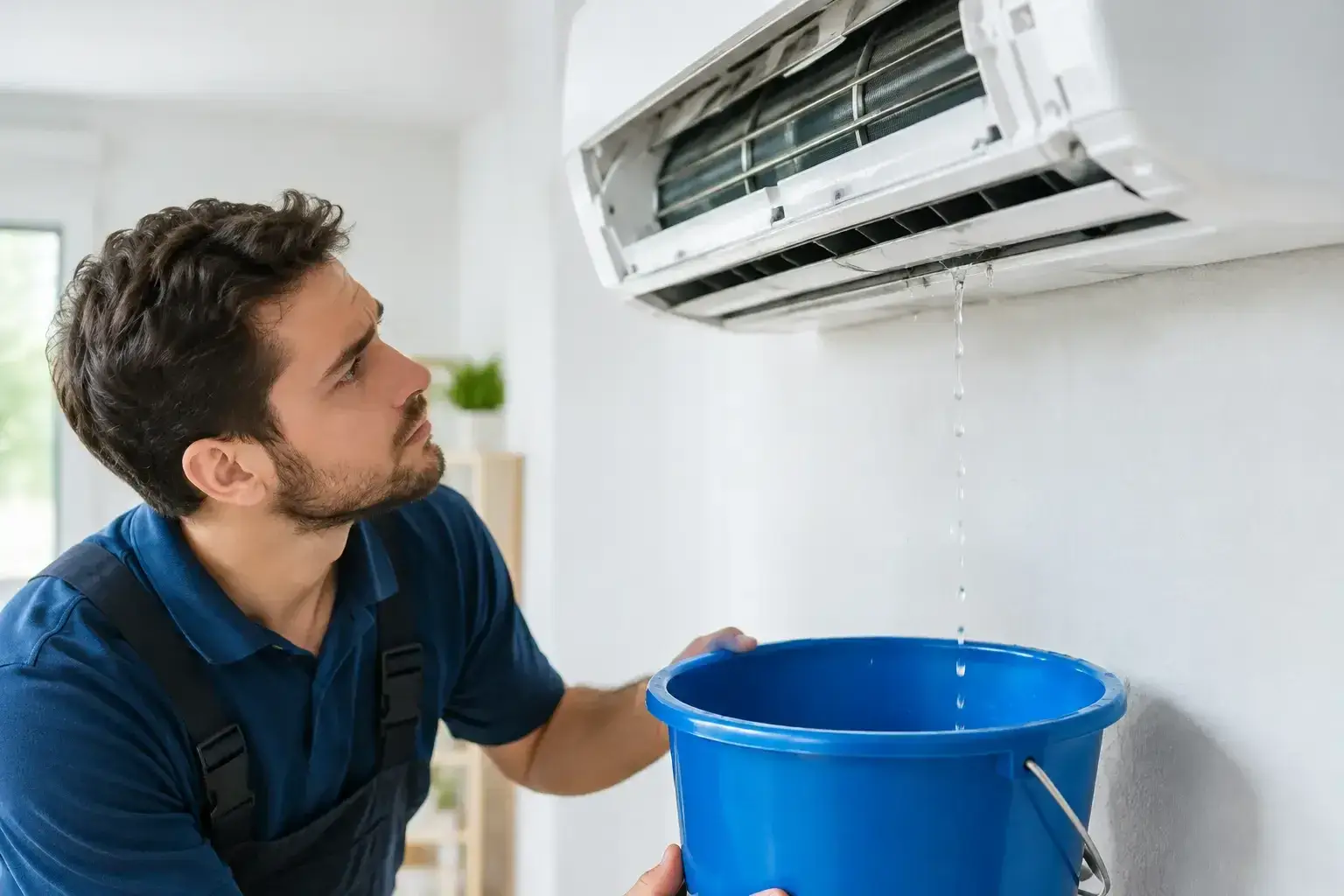
A puddle under an indoor AC unit can turn a hot afternoon into a property damage problem fast. Stopping the leak starts with protecting the space, shutting the system off when you need to, and figuring out whether you’re dealing with simple condensation or a repair that can’t wait.
First, contain the water
If water is dripping from the indoor unit, a ceiling vent, the furnace cabinet or the air handler, turn the cooling off at the thermostat. If the water is near anything electrical, don’t open panels or reach into the equipment. Switch off the breaker only if you can do it safely, then put towels or a shallow container under the leak.
Move electronics, furniture, stock and paper away from the area. In a condo, office or store, water can travel farther than you’d expect through ceilings, walls and floors. A few photos of the leak and any water stains will help the technician find the source.
Don’t keep the AC running just because it’s still cooling. A clogged drain or a frozen coil can start as a small drip and end as a ceiling leak, ruined drywall or a failed unit.
Why air conditioners make water
Your air conditioner pulls heat and humidity out of the indoor air. When humid air passes over the cold evaporator coil, the moisture condenses into water. Normally that water collects in a drain pan and runs out through a condensate drain line.
A leak means something in that path has gone wrong. The water may not be draining, the coil may be freezing, the pan may be damaged, or moisture may be forming where it shouldn’t. The right repair depends on where the water shows up and what the system was doing before the leak started.
The most common reasons an AC leaks water
A clogged condensate drain line
This is one of the most common causes. Dust, slime, debris and sediment build up in the drain line over time. When the line can’t carry the water away, it backs up into the drain pan and eventually overflows.
A clogged line usually leaves water near the indoor air handler or furnace. Some systems have a float switch that shuts the cooling off before the pan overflows, but not every system has one, and some don’t work. A technician can clear the line, check its slope, inspect the trap and confirm that the drain is flowing.
A dirty filter or restricted airflow
A very dirty filter cuts the airflow across the evaporator coil. The coil gets too cold and freezes, then releases a lot of water when the ice melts. You may notice weak airflow, warmer rooms, ice on the refrigerant lines, or a system that runs all the time and can’t keep up.
Replace a dirty filter with the correct size and type. Then leave the cooling off long enough for the ice to melt completely. Don’t chip ice off the coil or restart the system while it’s frozen. If it freezes again after the filter change, the cause may be low refrigerant, a blower problem, restricted ducts or a dirty coil, and that needs a technician.
A cracked, rusted or misaligned drain pan
Drain pans wear out, especially on older systems. A cracked main pan, a rusted backup pan, or a pan that has shifted out of position can spill water before it reaches the drain. This usually isn’t a good do-it-yourself repair, because the pan is hard to reach and the replacement has to fit the equipment.
If the unit is in the attic, a problem with the backup pan needs fast attention. Even a slow leak can ruin the insulation and the ceiling below.
A disconnected or badly installed drain line
A drain line fitting can loosen, crack or come apart. A line without enough slope can also hold water instead of draining it. This often shows up right after an installation, a renovation or a service visit, but old fittings fail too.
The fix is often simple, but it has to be done properly. The drain needs secure connections, a trap where the equipment calls for one, and installation to the manufacturer’s specifications. A quick patch may stop the drip for now and cause another backup later.
Low refrigerant or a mechanical problem
Low refrigerant can make the evaporator coil freeze, and the coil leaks water when it thaws. An air conditioner doesn’t use up refrigerant in normal operation. If the charge is low, there’s almost always a leak that needs to be found and repaired.
Compressor problems, blower motor problems and faulty controls can also cause icing. These need a service call, not a new filter. Running a frozen system can damage the compressor and make the repair much more expensive.
What you can safely check before calling
A homeowner, tenant, landlord or facility manager can do a few basic checks. Start at the thermostat. If the coil may be frozen, set the system to Off and switch the fan from Auto to On. The fan helps the coil thaw while the cooling stays off.
Check the filter and replace it if it’s dirty. Look around the indoor unit for standing water, a drain tube that has slipped out of place, or a full condensate pump. If your system has a condensate pump and it isn’t running, don’t try to bypass it. The pump may have failed, its outlet tube may be blocked, or its safety switch may be doing its job and stopping an overflow.
Don’t pour chemical drain cleaner into the condensate line. Harsh chemicals can damage parts, and they won’t fix a cracked pan, a badly designed drain or a freezing coil. Leave the refrigerant system alone too. Refrigerant work needs a certified technician with the right equipment.
Condo air conditioner leaks
Condo AC leaks need extra care because the equipment may sit in a closet, a ceiling bulkhead, a fan coil cabinet or a shared mechanical room. The water you see isn’t always right below the source. A blocked drain can leak into a neighbour’s suite, a hallway or the space inside a wall before anyone notices.
Turn the system off, protect the floor and tell building management if your condo rules require it. Then book an HVAC inspection quickly. The technician should find out whether the water is coming from the fan coil, the condensate pump, a drain connection, a frozen coil or somewhere else. Acting fast protects your suite and helps you avoid a bigger claim involving the suites around you.
When a leak is an emergency
A little water dripping from the outdoor unit is normal. Water dripping from an indoor unit is a repair problem. Get help quickly if water is reaching electrical equipment, coming through a ceiling, pooling near the furnace or air handler, staining the ceiling, or affecting a business area with customers, staff, equipment or stock.
Commercial buildings also have to think about downtime. Shutting off a leaking system may be the safest choice, but it quickly affects staff, customers and any temperature-sensitive stock. A qualified HVAC technician can deal with the leak, get the system running safely again where possible and recommend the right next step.
Prevent the next leak with seasonal maintenance
Most AC leaks are easier to prevent than to clean up after. A seasonal maintenance visit lets a technician inspect the drain pan, clear the drain line, test safety switches and pumps, check the filter and airflow, and look for early signs of coil freezing.
Property managers and business owners get the most from an inspection before the summer rush. A system can seem to cool normally while gunk slowly builds up in the drain line. Finding it on a planned visit is far less disruptive than finding it after water comes through a finished ceiling or into an occupied space.
Expert Heating and Air Conditioning handles AC diagnosis and repair and maintenance for homes and commercial properties across Toronto and the GTA. A good repair fixes whatever caused the water, so the leak doesn’t come back.