
Air Conditioner Repair in Toronto: When It Can't Wait
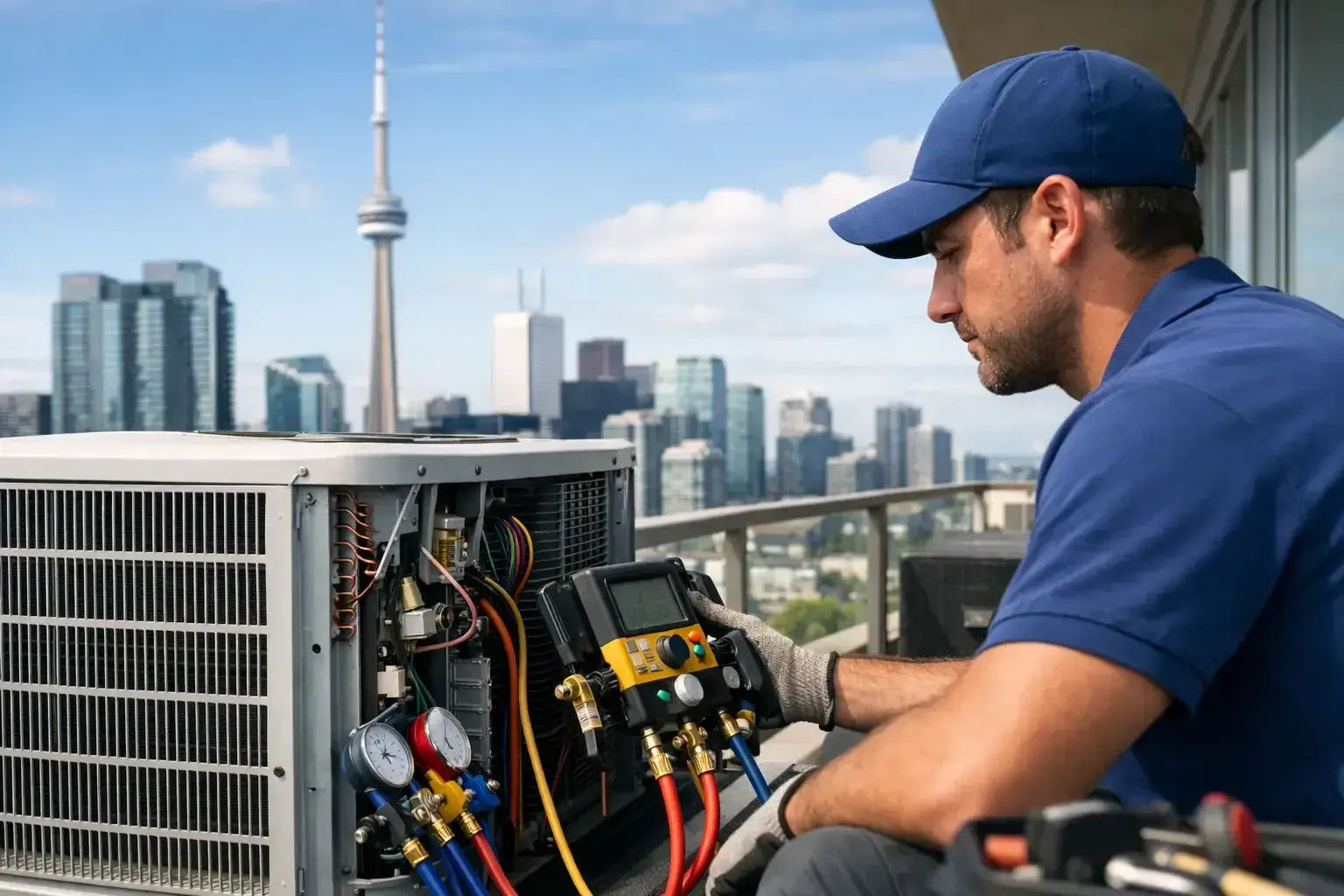
Toronto heat waves have a way of finding the weak spot in an air conditioner. The system runs all afternoon and the room never cools, or it shuts off just as the condo, house, office or store gets uncomfortable. Getting cold air back is only part of an air conditioner repair. The technician also has to find what actually failed, stop it from doing more damage, and help you make a choice that makes sense for your budget.
Signs your AC needs help right away
Some cooling problems can wait for a weekday appointment. Others can’t. If the air conditioner is blowing warm air, tripping the breaker again and again, leaking a lot of water, or grinding and banging, turn it off and book a service call. A failing unit that keeps running can wreck the compressor, overheat electrical parts, or put water through a ceiling.
A burning smell also means act now. It can come from an overheated motor or damaged wiring, and a qualified technician needs to look at it. Don’t keep resetting the breaker or forcing the system back on. Getting it running for an hour can turn a modest repair into a much bigger one.
In commercial buildings the clock runs faster. Staff in a hot office get less done, shoppers leave a stuffy store, and a warehouse or showroom with heat-sensitive stock can lose money every hour the cooling is down.
Why air conditioners stop cooling
An air conditioner is a set of connected parts, so the symptom you notice often isn’t where the fault is. Warm air can come from a wrong thermostat setting, a clogged filter, a failed capacitor, a dirty outdoor coil, a refrigerant problem or a bad compressor. A unit that switches on and off every few minutes may be too big for the space, short on airflow, or getting the wrong signal from the thermostat.
Water around the indoor unit usually points to a clogged condensate drain. On a humid day your AC pulls a lot of water out of the air. If it can’t drain, it backs up into the pan, trips a safety switch, or spills onto the floor. In a condo that small leak can reach the unit below.
Weak airflow has its own list of causes: a packed filter, blocked vents, dirty coils, damaged ducts or a blower problem. Any of them can leave some rooms warmer than the rest. Closing vents in the rooms you don’t use won’t fix it. It raises the pressure in the ducts and usually makes the airflow worse.
Safe checks before you call
Homeowners, tenants and property managers can check a few things without opening any equipment. Make sure the thermostat is set to Cool and set lower than the room temperature, and put in fresh batteries if it takes them. Then check that the breaker hasn’t tripped and the outdoor disconnect switch is on.
Pull out the air filter. If it’s gray, packed with dust, or hasn’t been changed in a few months, put in a new one of the right size and type. A clean filter keeps air moving and helps stop the indoor coil from freezing. Check that supply vents and return grilles aren’t closed or blocked by furniture, boxes or curtains.
Look over the outdoor unit and clear away leaves, grass clippings and other debris around it. Leave the panels on, and don’t touch the wiring, straighten the coil fins or try to add refrigerant. Those jobs need proper tools and training.
If the indoor coil has frozen, switch the thermostat from Cool to Off and set the fan to On if you can. Wait until the ice has melted completely, and don’t turn the cooling back on until a technician has found out why it froze. Running a frozen system is hard on the compressor.
A proper diagnosis saves money
The repair with the smallest first bill isn’t always the cheapest. A new capacitor may get a dead unit running again, but if a dirty coil, a loose electrical connection or poor airflow made the old one overheat, the new one won’t last either. A good diagnosis looks at the whole cooling system before anything gets replaced.
A qualified technician should check the thermostat, the electrical parts, airflow, the drain, the coils and, where it makes sense, the refrigerant readings. Then they should tell you in plain words what’s wrong, what needs fixing now, and what can wait for a regular maintenance visit. That way you know what you’re paying for before you say yes.
Ask about parts as well. Manufacturer (OEM) parts that carry a warranty fit the equipment properly and help keep the manufacturer’s warranty valid. On a newer system that’s still covered, the paperwork and the way the part is installed can matter as much as the part.
Repair or replace?
A broken air conditioner doesn’t automatically need replacing. If it’s fairly new, has been looked after, and needs a simple electrical, drain or airflow repair, fixing it is usually the sensible choice.
Replacement is worth a look when breakdowns keep coming, repair bills keep growing, the compressor has died on an older unit, or the system just doesn’t cool well anymore. Older systems that use phased-out refrigerants are harder to repair, and the repairs tend to cost more over time. A unit that was the wrong size from day one may never cool the house evenly, however many parts get swapped.
No single age means an air conditioner is done. How hard it works, how well it’s been maintained, how it was installed and the shape of the ductwork all count. In a detached house, a new system can be a chance to fix an upstairs that’s always hotter than the main floor. In a condo, access, building rules and the existing fan coil setup limit what you can install. For a business, the hours you can afford to be without cooling are part of the cost.
Ask for the repair cost, how reliable the unit is likely to be after the repair, what warranty you’d get, and what replacement would cost, side by side. The recommendation should fit your property and your budget. A new system that doesn’t fix the actual problem is money wasted.
What a good service visit looks like
A good visit starts with the technician asking questions. Tell them when the problem started, whether the unit makes new noises, whether the breaker trips, and which rooms are warmer than others. Property managers should mention recent renovations, tenant complaints, leaks or changes in how the space is used.
After looking at the system, the technician should explain what’s wrong and give you a price before any major work starts. They should also keep the work area clean, tell you when they’re arriving and how long the repair will take, and run the system to make sure it cools before they leave.
Heading off the next breakdown
Most air conditioners give warning signs before they fail. If it takes longer to cool the house, rattles, pushes less air, or your hydro bill climbs, or you keep turning the thermostat down, get it checked before the hottest weeks of summer. Wait until it quits completely and you may be waiting for an appointment in a heat wave, with more parts damaged in the meantime.
Yearly maintenance catches worn electrical parts, drain problems, dirty coils and blocked airflow before they turn into a no-cooling call. It’s also when the technician checks the filter, the thermostat settings and how the whole system is running. Landlords and businesses with several units often find a maintenance plan makes scheduling easier and cuts down on surprise shutdowns. If the heat goes out in winter instead, our guide to 24 hour HVAC service covers what to do until help arrives.
When your air conditioner starts acting differently, get it looked at early. You’ll have more choice about whether to repair it or replace it, and more time to decide.