
Furnace Won't Ignite? Safe Checks Before You Call for Repair
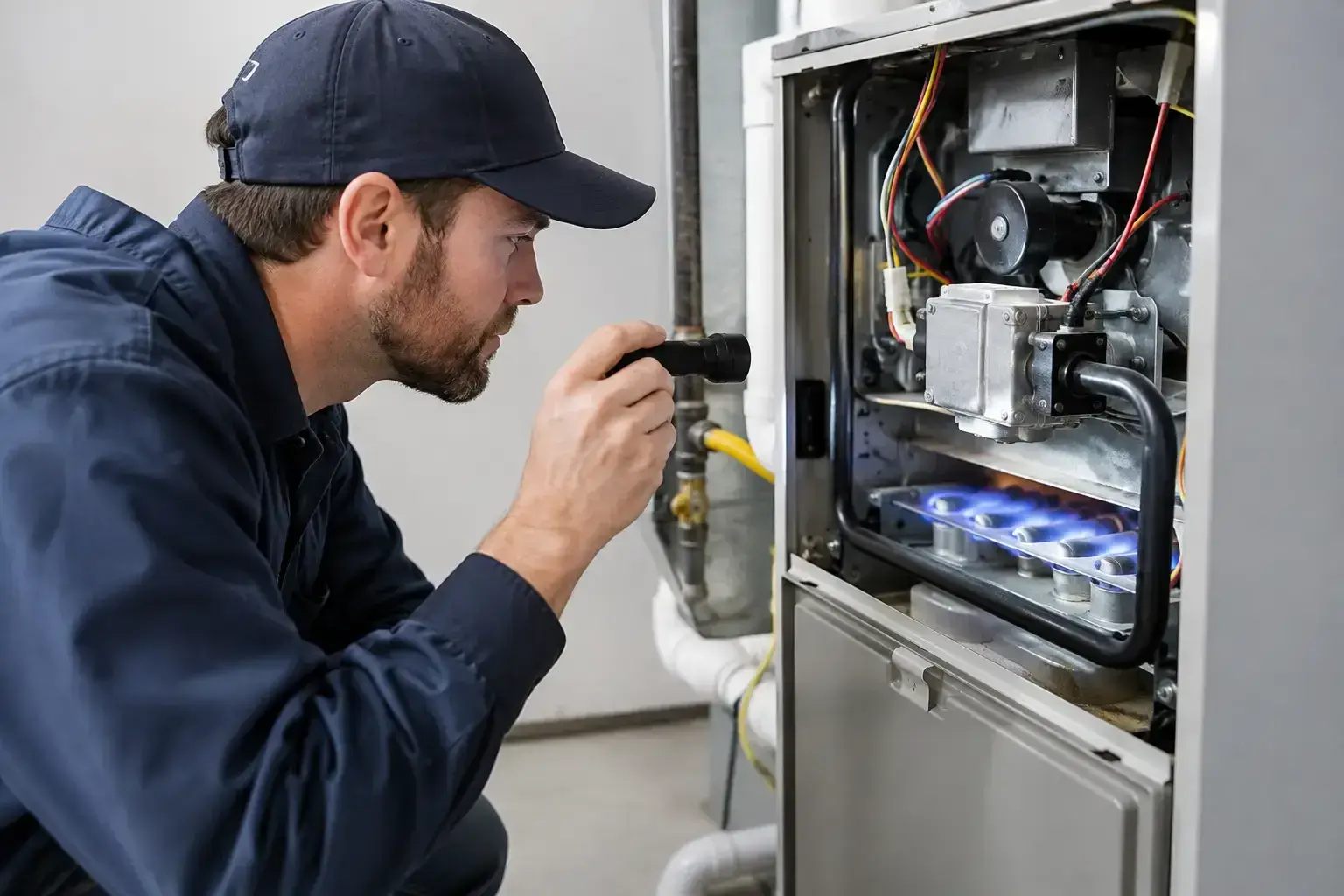
A furnace can sound like it’s about to start, then stop without making any heat. You might hear the thermostat click, the blower come on, or a few quiet attempts to light before the system shuts down. A few safe checks will tell you whether it’s a simple thermostat or airflow problem or something that needs an HVAC technician right away.
Stick to safe checks. Modern furnaces have several safety controls, and repeated ignition failures are how the furnace stops itself from running in an unsafe condition. Don’t bypass switches, don’t try to light a burner yourself, and don’t keep resetting a furnace that won’t start.
What happens when a furnace lights
A gas furnace goes through a set sequence before it blows warm air. The thermostat calls for heat and the inducer motor starts. A pressure switch confirms that combustion gases can vent properly. The furnace then powers its igniter, opens the gas valve and uses a flame sensor to confirm the burners lit. Only then does the main blower turn on to move heated air through the house.
A failure at any of those steps can look like an ignition problem from the living room, so pay attention to exactly what the furnace does. Does it do nothing at all? Does it start and quit after a few seconds? Does it run but blow cool air? Each one points to a different part of the sequence.
If you smell gas, leave the house right away. Don’t touch light switches or use your phone inside. Once you’re outside, call 911 or your gas utility’s emergency line. Don’t go back in to keep troubleshooting.
Safe first checks
Before you open anything or assume a big repair, go through the controls and conditions that most often stop a furnace from getting a proper call for heat.
Make sure the thermostat is calling for heat
Set the thermostat to Heat and raise it 3 to 5 degrees above the current room temperature. Set the fan to Auto, not On. With the fan on On, the blower can move room-temperature air even when the furnace hasn’t lit, which makes it seem like the furnace is blowing cold air.
If the display is blank or faint, replace the batteries if it takes them. A programmable thermostat with a weak battery, a wrong schedule or a wiring problem may not send a steady signal. On a smart thermostat, check for an equipment alert or a lost connection to the furnace.
Check the power and the furnace switch
Most furnaces have a service switch nearby that looks like a light switch. It’s easy to flip off by accident while cleaning or moving things around the utility room. Make sure it’s on.
Then check the electrical panel for a tripped furnace breaker. If it tripped once, reset it fully by moving it to Off and then back to On. If it trips again, stop. A breaker that keeps tripping can mean an electrical fault, a failing motor or a damaged part, and a technician needs to find it.
Check the filter and the return air
A badly clogged filter can make the furnace overheat and shut itself off. It won’t usually cause a failed igniter, but restricted airflow causes repeat heating problems that look much the same from the thermostat.
Turn off the furnace power before you check the filter. Replace a dirty one with the right size and rating for your system. Make sure supply vents and return grilles are open and not blocked by furniture, rugs or boxes. Even a brand-new filter can cause trouble if it went in backward or is too restrictive for the furnace.
Look at the gas shutoff, but don’t adjust it
If there’s no gas smell, take a look at the manual gas shutoff near the furnace. On most installations, a handle running parallel to the pipe means open and a handle across the pipe means closed. Don’t force a stuck valve or change anything if you aren’t sure what you’re looking at.
A valve someone closed recently, a furnace that was just serviced, or a long stretch without using the heat can all explain burners that won’t start. Tell the technician what you saw. It isn’t a reason to take the furnace apart or try to relight it.
Check the outdoor intake and exhaust pipes
High-efficiency furnaces usually vent through white PVC pipes that end outside. Snow, ice, leaves or a nest can block the intake or exhaust, and the pressure switch then won’t let the furnace light.
Look at the pipe openings from the ground. Clear loose snow and obvious debris from around the ends, but don’t push tools into the pipes, disconnect the venting or chip hard at ice. Damaged or badly installed vent piping is a safety problem for a professional to fix.
Read the error code before you reset
Many furnaces have a small window showing a blinking LED light. The code chart is often printed inside the service panel door. Without removing panels or touching any wiring, watch the blink pattern and write it down.
Typical codes include pressure switch open, ignition lockout, flame not detected, limit switch open and rollout switch open. The wording varies by brand. A code tells you which safety circuit stopped the furnace, not always which part failed. A pressure switch code, for example, can come from a blocked vent, a drain problem, a cracked hose, the inducer motor or the switch itself.
You can try one reset: turn the furnace off at the service switch for a few minutes, then turn it back on. Stay close and watch one full startup attempt. If it fails again, don’t keep cycling the power. Repeated resets can make some problems worse and can put the furnace into a longer lockout.
What the common symptoms usually mean
A furnace that stays silent when the thermostat calls for heat may have a thermostat, power, control board or safety switch problem. If a small motor starts but the burners never light, look at the venting, the pressure switch, the condensate drain or the igniter.
If you hear clicking or see the furnace try to start several times and then shut down, the hot surface igniter may be weak or cracked, the gas supply may be interrupted, or the flame sensor may not be detecting a steady flame. A dirty flame sensor is a common repair, but the sensor is fragile and sits inside the furnace. Cleaning it the wrong way can damage it or hide another problem, so leave it to a technician.
Burners that light and go out within seconds usually mean the flame sensor isn’t confirming the flame. A furnace that runs a few minutes and then stops may be overheating from poor airflow, a failing blower, a dirty filter or a limit control problem. A new igniter won’t fix an airflow problem, and resetting a limit switch doesn’t fix whatever made it trip.
When to stop and call for furnace repair
Stop and book service if the furnace keeps locking out, trips a breaker, shows a rollout or limit code, makes unusual noises, or cycles on and off without heating the house. Soot, scorch marks, a burning smell or water around the furnace also need a technician right away. If your carbon monoxide alarm goes off, get everyone outside and call 911.
Landlords and property managers should act quickly on an ignition problem even when there’s a backup heat source. Repeated failed starts can leave tenants without heat overnight and turn a small repair into a bigger one. Write down the error code, the thermostat setting and what the furnace did before it stopped. Those details help the technician find the problem faster.
A trained technician can test the igniter, gas pressure, venting, pressure switches, flame sensor, control board and safety controls without bypassing any of the protections built into the furnace. Expert Heating and Air Conditioning repairs furnaces in homes and commercial properties with parts that match the manufacturer’s specifications.
Preventing the next ignition failure
You can’t predict every ignition problem, but yearly furnace maintenance makes a no-heat call in the middle of winter less likely. A proper visit checks combustion, the igniter, the flame sensor, the filter, the venting, the condensate drain, electrical connections, the blower and the safety controls.
Between visits, change filters on schedule, keep the area around the furnace clear and check the outdoor vents after heavy snow. Notice when the furnace starts acting differently. One that takes longer to start, cycles more often or sometimes blows cool air is warning you before it quits on the coldest night of the year.