
Furnace Carbon Monoxide: Warning Signs and What to Do
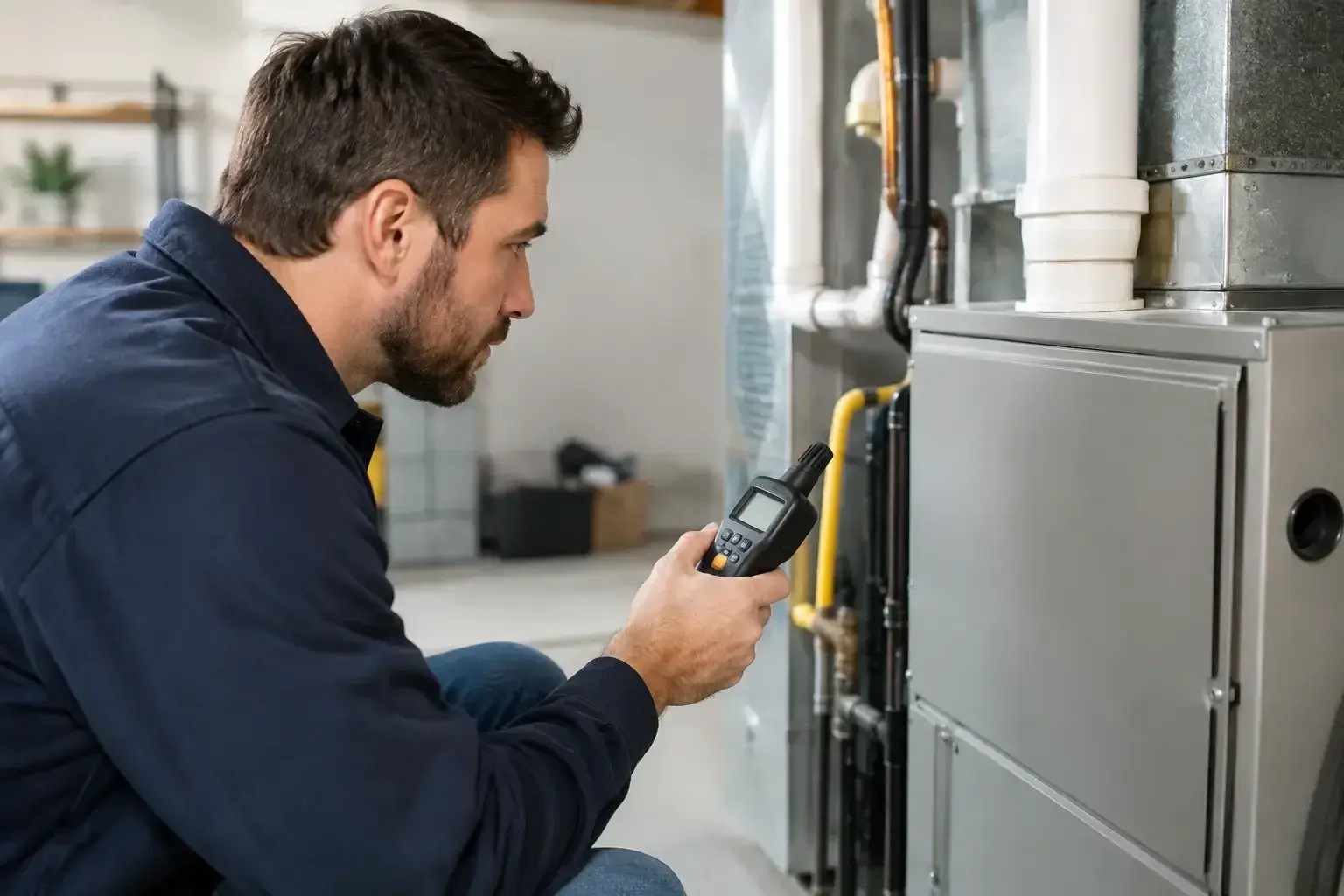
A furnace breakdown is a nuisance. A carbon monoxide problem is an emergency. Carbon monoxide (CO) has no smell, colour or taste, so you can’t count on noticing it. Working CO alarms and a properly maintained furnace are what protect you.
This matters most once the cold weather starts and furnaces work harder. A furnace that ran fine last week can develop a venting, combustion or mechanical problem that needs a technician soon. That goes for homeowners, landlords and property managers alike.
How a furnace can produce carbon monoxide
A natural gas furnace produces combustion gases as it makes heat. When it’s working properly, it burns the fuel cleanly and the venting carries those gases outside. Carbon monoxide becomes a risk when combustion is incomplete or the exhaust can’t get outside the way it should.
Not every furnace problem creates CO. A noisy blower motor, a worn thermostat or a clogged filter can make the house less comfortable without producing any. Problems with the burners, the heat exchanger, the flue pipe, the venting or the combustion air supply are the ones to take seriously.
A trained HVAC technician can test combustion, inspect the venting and find the source of a problem. A CO alarm protects the people in the house, but it can’t tell you which appliance or condition set it off.
Start with your CO alarms
The safest way to check for carbon monoxide at home is to make sure you have working CO alarms and to test them. Follow the manufacturer’s instructions for placement, testing, battery changes and replacement. Many alarms have to be replaced after a set number of years, even if they still seem to work.
Press the test button on each alarm. That confirms the alarm has power and the siren works. It doesn’t produce any carbon monoxide and it doesn’t prove the sensor is still accurate, which is why you replace alarms on schedule.
Put CO alarms on every level of the home and near the bedrooms, following the manufacturer’s placement directions. In a condo, townhouse, rental or larger house, think about where people sleep and where the gas appliances are. Commercial buildings should have a life safety plan that fits the building’s use, layout and local requirements.
An alarm that chirps every so often is usually warning about a low battery or telling you it has reached the end of its life. That isn’t the same as a CO alarm, but check the manual and deal with it right away. If the alarm sounds a steady emergency alert or shows a CO reading, treat it as an emergency.
What to do if a CO alarm goes off
Don’t try to find the source yourself. Get everyone outside into fresh air right away, pets included, then call 911 from outside.
Don’t go back in until the firefighters say it’s safe. Opening windows doesn’t make it safe, and neither does resetting the alarm to stop the noise. Fresh air may lower the level for a while, but it won’t fix a furnace, fireplace, attached garage or venting problem.
Once the house has been cleared, have a qualified HVAC technician inspect the furnace and any other gas appliances before you use the heat normally again. If the furnace turns out to be the source, it may need a repair, an adjustment or replacement, depending on what the technician finds.
Signs your furnace needs an inspection
You can’t sense carbon monoxide, but a furnace in trouble sometimes shows other signs. None of these confirm a CO leak on their own. They do tell you to book an inspection now instead of waiting for the furnace to break down.
Watch for soot or dark stains around the furnace or vents, condensation on nearby windows, a burner flame that is mostly yellow instead of a steady blue, or a furnace that keeps shutting itself off. A damaged or disconnected vent pipe, corrosion around vent connections, or exhaust smells indoors need attention right away.
Pay attention to how people feel too. Headaches, dizziness, nausea, weakness, chest pain, confusion or flu-like symptoms that get better once you leave the building can come from carbon monoxide. They can also have other causes, so don’t try to work it out at home. Get to fresh air and call 911 if you suspect CO exposure.
Be especially careful if several people in the same home, office or store feel sick at the same time, or if symptoms show up mostly while the furnace is running. Never ignore an alarm because nobody feels sick. CO affects people differently, and people who are asleep may not notice any symptoms.
What a technician checks on a furnace CO call
A proper inspection goes well past checking the thermostat or changing the filter. A trained technician checks how the furnace runs and tests its safety controls, then uses professional instruments to measure combustion and carbon monoxide.
The visit can include checking the burners and ignition, looking at the heat exchanger for visible damage, checking the flue and vent connections, confirming the furnace is drafting properly and testing the combustion gases. The technician also looks for conditions that cause incomplete combustion, such as restricted airflow, dirty burners, incorrect gas pressure or a blocked vent.
The exact work depends on the type of furnace, its age, how it was installed and what the tests show. A newer furnace can still have a venting problem, and an older one may need a closer look for worn parts. If the heat exchanger is cracked or unsafe, a repair may not be possible. The furnace may need to be shut down and replaced to keep everyone in the building safe.
Don’t take shortcuts here. Don’t remove furnace panels, adjust gas parts, tape over a damaged vent pipe or bypass a safety switch. Any of those can make the hazard worse and lead to a bigger repair bill.
Preventing carbon monoxide problems
Yearly furnace maintenance is one of the simplest ways to avoid a surprise during heating season. Booking it before the coldest weeks gives the technician time to find developing problems, clean and inspect the main parts and confirm the furnace runs safely.
Between visits, keep the area around the furnace clear and keep the outdoor exhaust and intake pipes free of snow, ice and leaves. Check the filter regularly and replace it when it’s dirty. A clean filter won’t prevent every combustion problem, but it keeps the airflow right so the furnace runs the way it was designed to.
Don’t store paint, gasoline, cleaners or anything else flammable next to the furnace. If the furnace keeps cycling on and off, makes unusual sounds, heats unevenly or your gas bill jumps for no clear reason, book a diagnostic visit. Waiting until it quits on the coldest night usually turns a manageable repair into an urgent one.
For landlords and property managers, regular maintenance also protects tenants, cuts down on no-heat calls and gives you a record that the safety equipment was professionally checked. For businesses, planned inspections help prevent heating outages that affect staff, customers and stock.
When to call for help
Call for service right away if the firefighters have cleared the building after a CO alarm, if you see a damaged vent connection, or if the furnace has shut down for a safety reason. If there’s no alarm but the furnace shows any of the warning signs above, book an inspection as soon as you can.
Expert Heating and Air Conditioning diagnoses and repairs furnaces for homes and businesses across Toronto and the GTA, including urgent heating problems. Our technicians will check the system, explain what they find in plain language and recommend the safest next step.