
Commercial HVAC Contractors in Toronto: What Businesses Should Expect
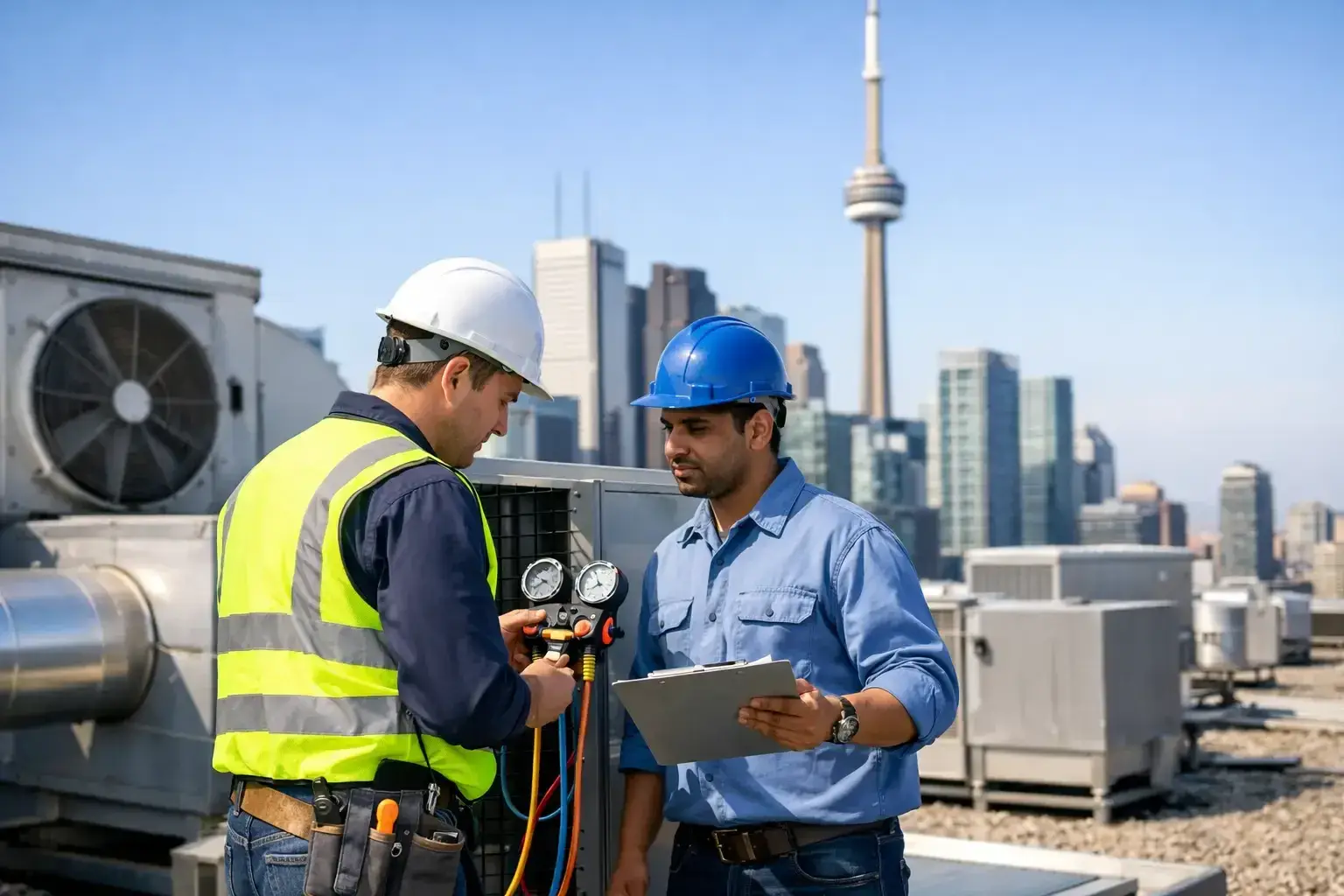
A cold showroom sends customers back out the door. An office with no air conditioning is half asleep by lunchtime, and a warehouse with uneven temperatures can put stock and equipment at risk. When the system in your building fails, the contractor you call has to find the problem, get the space comfortable again, and tell you plainly what comes next.
For retail stores, offices, warehouses, industrial sites and multi-unit commercial buildings, heating and cooling affect customers, staff, tenants, inventory and operating costs every day. A good contractor shows up fast when something breaks and then helps you avoid the next breakdown with regular service.
What commercial HVAC service should cover
Commercial equipment works harder and runs longer than a home system. One rooftop unit may serve an entire retail floor. A commercial kitchen or an industrial workspace may depend on a make-up air unit. Several furnaces, air handlers, thermostats, ventilation systems and zones may all have to work together to keep one building comfortable.
That’s why a service call should start with a look at the whole property, not just the loudest complaint. If one office is freezing while the next one is too hot, the cause could be a thermostat setting, damaged ductwork, poor airflow, a failing blower motor, a controls problem, or equipment that was never balanced for the space.
A capable commercial team deals with the immediate problem and looks for what caused it. Depending on the building, the fix might be a repair, filter changes, thermostat adjustments, duct cleaning, better ventilation, new equipment or a maintenance agreement. How far to go depends on the equipment, the building, and how much your business can afford to lose if the system stops.
When to call a commercial HVAC contractor in Toronto
Some problems are obvious emergencies: a furnace that fails in a Toronto cold snap, cooling that quits in a heat wave, a burning smell, loud new noises, or a system that keeps shutting itself off. Get those looked at right away. Waiting can turn a manageable repair into damage to major parts, or force you to close off part of your space.
Other warning signs are quieter. Utility bills that climb for no clear reason, hot and cold spots, weak airflow, people constantly changing the thermostat, extra dust, water around equipment and repeat tenant complaints can all mean a system is losing efficiency or getting close to a breakdown.
For a property manager, the call often comes down to risk. A small problem in a storage room can wait for regular hours. The same problem in a lobby, a server room, a medical office or a sales floor can’t. Ask any contractor you’re considering whether they answer after hours and on weekends, and how fast they can get someone on site. Our guide to 24 hour HVAC service covers what to do while you wait.
Repair, replace or maintain
An older unit doesn’t always need replacing, and not every repair is worth paying for. The right choice depends on the equipment’s condition, whether parts are still available, its repair history, its efficiency, and how much trouble the next failure would cause.
A one-off fault on a newer system usually calls for a targeted repair with manufacturer (OEM) parts that carry a warranty. If the equipment has been looked after and the repair gets it running reliably, fixing it is often the cheaper option up front, and you avoid scheduling a bigger installation.
Replacement makes more sense when breakdowns keep coming, major parts are failing, parts are hard to find, or the system no longer suits the building. An air conditioner that’s too small may never keep a busy showroom cool in July. An aging furnace may struggle through long stretches of freezing weather. A well planned installation can make the space more comfortable, cut wasted energy, and make operating costs easier to predict.
Maintenance keeps you from making either decision at the worst possible moment. On a regular visit, a technician can catch worn belts, dirty filters, drain problems, electrical faults, weak airflow and falling performance before any of them turns into an emergency call. You’ll still get the odd surprise, but fewer of them, and you’ll have time to budget for bigger work.
Why commercial experience matters
Commercial HVAC is different work from residential. Building layouts, ventilation needs, rooftop access, gas lines, controls, tenant schedules and safety rules all change the job. Installations also have to meet the manufacturer’s requirements and the safety codes that apply to your building.
A system installed with poor airflow, the wrong controls or a rushed start-up may run, but it may never perform the way it should. You pay for that in repeat visits, and a careless install can also put the equipment warranty at risk.
Ask direct questions before you approve any work:
- Will they explain the diagnosis in plain language?
- Are the replacement parts OEM with a warranty?
- Is the new equipment sized for the space and the way you use it?
- Does the installation plan account for ventilation, controls and the systems already in the building?
A contractor who answers these plainly is usually thinking about how the system will run in five years.
Plan maintenance around how your business runs
A maintenance plan should fit the way your property is actually used. A small office open weekdays has different needs from a warehouse with loading doors opening all day, a restaurant putting out heat and grease, or a store that has to stay comfortable through long weekend hours.
Seasonal visits are a good place to start. Have the heating equipment inspected before winter, so furnace problems turn up before the cold does. Before summer, have the air conditioning checked, including refrigerant, electrical parts, condensate drains and airflow. Dusty, busy or industrial spaces need filters changed more often.
An annual service contract also means the same contractor gets to know your equipment, its repair history, how to get onto the site, and what matters most to your operation. During an outage you spend less time explaining the building and more time getting it fixed.
For landlords and property managers, the service records help with planning too. They show which units are getting expensive to keep running, which locations keep getting airflow complaints, and where upgrades will be needed. You can schedule that work around tenants, business hours and your budget instead of waiting for the next breakdown.
What to look for in a commercial HVAC partner
Price matters, but the lowest quote isn’t always the lowest cost. If the repair is incomplete, the wrong part goes in, or the contractor can’t come back when the system fails again, the downtime can cost far more than you saved. Look for clear pricing that spells out what’s included and why each piece of work is recommended.
Response time matters just as much. You shouldn’t be left wondering whether anyone will pick up when the heat fails overnight or the cooling quits on a weekend. Expert Heating and Air Conditioning works with commercial customers on both emergency calls and scheduled service.
The best time to set up that relationship is before something breaks. Keep your equipment records handy, write down recurring comfort complaints, and book service before the heating and cooling seasons start. When a problem does come up, the team you call will already know your building.