
7 Signs Your Air Conditioner Has a Refrigerant Leak
The air conditioner is running and the thermostat is set right, but the house still feels warm and sticky. That’s often how a refrigerant leak first shows up. The system may still blow some cool air, so it’s easy to shrug off, yet a slow leak can turn a small repair into a much bigger one.
An air conditioner doesn’t use up refrigerant the way a car uses gas. The refrigerant moves around a sealed loop, picking up heat inside the house and letting it go outside. If the level is low, there is almost always a leak somewhere in that loop, and topping it up without finding and fixing the leak only buys a little time.
Why a refrigerant leak needs attention soon
With too little refrigerant, the air conditioner can’t move heat out of the house efficiently. It runs longer, cools unevenly and uses more electricity while keeping you less comfortable.
The longer that goes on, the harder it is on the compressor, one of the most expensive parts of an AC system. Calling early can mean fixing one fitting instead of replacing the whole system in the middle of a Toronto heat wave. That matters whether you own the house, rent it out or manage a building.
Leaks come from vibration, worn connections, corrosion, damaged coil tubing or an old repair that didn’t hold. The source is often hard to spot from outside, especially in condos, older homes, commercial units and equipment squeezed into tight mechanical rooms.
Signs of an air conditioner refrigerant leak
No single symptom proves a leak. A dirty filter, the wrong thermostat setting, an electrical fault or blocked airflow can all cause similar trouble, and our guide to an AC that’s not cooling covers those simpler checks. When several of the signs below show up together, it’s time for a technician to take a look.
1. The AC runs but doesn’t cool like it used to
This is usually the first thing people notice. Air still comes out of the vents, but it feels only slightly cool. Rooms near the thermostat may be fine while bedrooms, the upper floor or rooms that get afternoon sun stay warm.
If the system used to keep up on an ordinary summer afternoon and now runs nonstop without reaching the set temperature, low refrigerant is one possible reason. Adding more refrigerant isn’t the fix on its own. A technician needs to test the system and find out why the level dropped.
2. Cooling cycles run longer than normal
A healthy air conditioner turns on and off as it holds the indoor temperature. When refrigerant is low, it takes longer to pull heat out, so the unit runs for long stretches. Some barely shut off until evening, even on days that aren’t especially hot.
Poor insulation, dirty coils, an undersized unit or a lot of heat inside the house can also cause long cycles. If the long run times are new and the cooling feels weak too, book service before the system gets pushed any harder.
3. Ice forms on the indoor coil or refrigerant line
Ice or frost is a serious warning sign. You may see it on the insulated copper line near the outdoor unit, or a technician may find it on the indoor evaporator coil. Low refrigerant drops the pressure in the system, the coil gets too cold, and moisture in the air freezes on it.
Ice on the coil blocks airflow and stops the system from moving heat properly. If you keep running a frozen air conditioner, the melting ice can cause water leaks around the indoor unit, and the compressor takes extra strain.
If you see ice, switch the cooling off. Set the thermostat fan to ON if your equipment allows it, then book an inspection. Don’t chip at the ice or open up enclosed parts yourself.
4. You hear hissing or bubbling near the equipment
A small leak can make a faint hiss around the refrigerant lines, coils or connections. Bubbling or gurgling can happen when refrigerant moves through the system at the wrong pressure. You won’t always hear these sounds, and they’re easy to mistake for normal operation.
Take an odd sound as a clue. A trained technician confirms a leak, and finds where it is, with proper leak detection tools, pressure tests and system readings.
5. The air inside feels more humid than usual
Central air also pulls moisture out of the air as it cools. When the evaporator coil can’t get cold enough, humidity control usually suffers along with the cooling.
A house set to 74 degrees can still feel uncomfortable if the air is damp. You might notice clammy rooms, a musty smell, condensation on the windows or poor sleep even though the AC seems to be running. Plenty of things can raise humidity, but weak cooling and damp air together shouldn’t be ignored.
6. Your hydro bills go up for no clear reason
A leaking system has to run longer to do the same job, and that can show up on your electricity bill, mostly in the hottest weeks of summer. The increase is often gradual, so it helps to compare bills and pay attention to how long the AC runs each day.
A higher bill on its own doesn’t prove a leak. Weather, how many people are home, insulation and thermostat habits all play a part. If the bill climbs while you’re also seeing weak cooling, frozen lines or long cycles, get the system checked.
7. The system stops cooling altogether
Eventually some systems stop cooling almost completely. The indoor blower keeps running, so it seems like the air conditioner is working, but the air from the vents is warm.
At this point, don’t keep restarting the unit and hoping it comes back. Running a system that’s low on refrigerant can damage it further. Get it diagnosed, especially if a family, tenants, customers or staff are counting on the cooling.
What a proper refrigerant leak repair involves
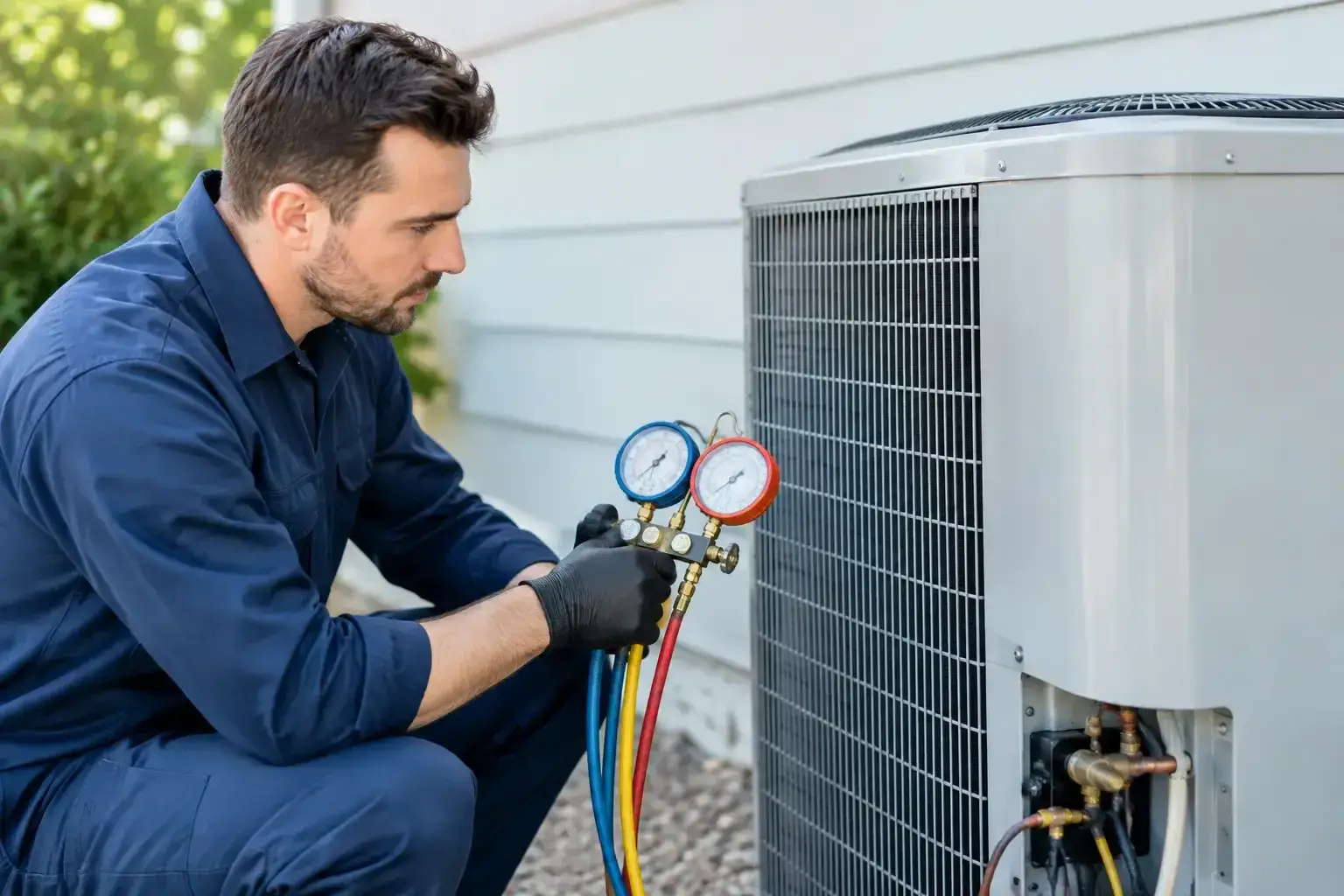
The technician should check the whole system before deciding on a fix. That means inspecting the refrigerant lines and coils, checking airflow, reading the operating pressures and looking for signs of the leak. Depending on the equipment and where the leak is, the repair might mean sealing or replacing a damaged line, fitting, coil or other part.
Once the leak is fixed, the system has to be evacuated and recharged to the manufacturer’s specifications with the correct refrigerant type and amount. An undercharged system cools poorly, and an overcharged one runs less efficiently and less reliably.
Leave this job to a professional. Refrigerant has to be handled and recovered with the right equipment and procedures. A good technician will also tell you whether the repair is worth the money, given the age of the equipment, the part involved and the condition of the rest of the system. If you’re in Toronto or elsewhere in the GTA, our AC repair service can find the leak and walk you through the options.
Repair or replace?
A small leak that’s easy to reach on a newer system can usually be repaired. If the problem is a damaged connection or a line that can be serviced, a repair may get the system running efficiently again without a big project.
The choice gets harder with an older system that has a leaking evaporator coil, keeps losing refrigerant or is slipping in other ways too. A repair can still make sense, but weigh it against how reliable the system will be, how efficient it is, whether parts are still available and how likely another expensive call is.
For rental properties and commercial spaces, downtime counts too. A cheaper repair may not be the better deal if it leaves tenants or customers without dependable cooling in July. Ask the technician to separate what needs doing now from what can wait and be planned.
Keeping a small leak from becoming a big problem
Regular maintenance won’t prevent every leak, but it gives a technician the chance to spot changes in performance before they turn into an emergency. A seasonal tune-up can catch weak cooling, dirty parts, loose electrical connections, drainage problems and airflow issues that make the system work harder.
You can help by changing the filter on schedule, keeping leaves and debris away from the outdoor unit, and noticing when the AC starts acting differently. A small drop in comfort is often the first sign that something is wrong. If your air conditioner is already struggling, have it looked at before the next heat wave instead of finding out on the hottest day of the year.