
AC Not Cooling? Safe Checks to Try Before You Call
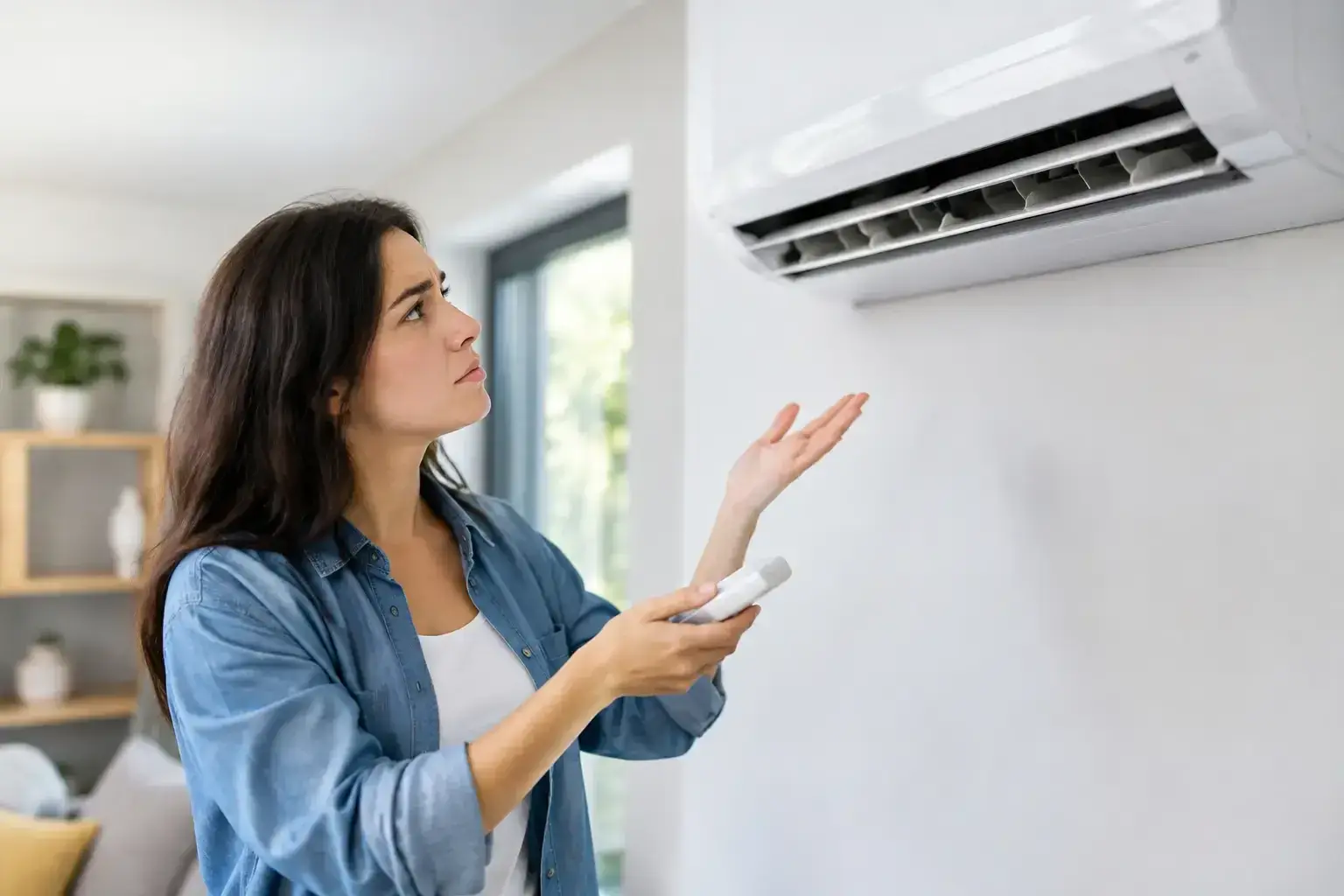
It’s hot out, the AC is running, and the rooms still feel sticky. Sometimes the cause is as small as a thermostat setting or a dirty filter. Other times it’s a frozen coil, an electrical fault or a refrigerant leak that needs a technician. A few safe checks first can save you a service call, and if they don’t fix it, they keep a small problem from getting bigger while you wait.
Start with the thermostat and airflow
Make sure the thermostat is set to Cool and set a few degrees below the room temperature. Settings get bumped, batteries die, and a programmed schedule can keep the system off when you expect it on. These are some of the most common reasons an AC doesn’t start cooling.
Next, stand by a supply vent. If air is coming out but it’s warm or only slightly cool, the system is running without moving heat out of the house the way it should. If very little air comes out, look at the filter, the return vents, the blower or a frozen indoor coil.
Pull the air filter. A clogged filter chokes airflow, makes the system work harder and can freeze the evaporator coil. Replace a disposable filter that looks grey, matted or dusty. Pets, renovation dust and heavy summer use mean you may need to change it sooner than the package says.
Check that supply and return vents are open and not covered by furniture, rugs, bins or curtains. Closing several vents to push more air into one room causes airflow problems and makes the system less efficient. In condos and townhouses, furniture often ends up in front of a return vent because space is tight.
Why the AC runs but doesn’t cool
The thermostat calls for cooling, the indoor blower moves air, the outdoor unit gets rid of heat, and refrigerant carries heat from inside to outside. If any one of those steps fails, you get warm air even though the system sounds like it’s working.
A dirty outdoor unit is one common cause. It needs open space around it to release heat. Leaves, grass clippings, cottonwood fluff and other debris collect on the coil, and shrubs planted too close cut off airflow. Turn off the power before you clear loose debris. Don’t use a pressure washer, and don’t bend the thin coil fins.
A tripped breaker or outdoor disconnect is another. The indoor fan can keep running while the outdoor unit sits idle, so it seems like the AC is on. From a safe distance, listen for the outdoor unit. If it’s silent while the thermostat is calling for cooling, check your electrical panel and reset a tripped breaker once. If it trips again, leave it off and book a repair. Resetting it over and over can damage the equipment and is a safety risk.
Then there’s a frozen evaporator coil. Watch for weak airflow, ice on the refrigerant line near the indoor unit, water around the furnace or air handler, or cooling that fades as the day goes on. Ice on the coil doesn’t mean the system is making extra cold air. It means heat isn’t moving through the system properly, usually because of poor airflow or low refrigerant.
To thaw it, switch the thermostat from Cool to Off and set the fan to On if your thermostat has that option. Don’t chip at the ice, and don’t keep running the cooling while it’s frozen. Once it thaws, have a technician find out why it froze before you go back to normal use.
Problems that need a technician
Some AC problems aren’t safe or practical for a homeowner, tenant or facility manager to handle. You can’t top up refrigerant the way you top up washer fluid. A sealed system shouldn’t lose refrigerant in normal use, so low refrigerant almost always means a leak. The leak has to be found and repaired, then the system tested and charged to the manufacturer’s specifications.
Electrical parts fail too. A worn capacitor, a bad contactor, a failing fan motor or a compressor problem can keep the outdoor unit from starting or from getting rid of heat. These repairs involve high voltage and proper test equipment. Swapping parts on a guess wastes money and can void the manufacturer’s warranty.
Drainage is the third. Humid weather makes a lot of condensation. If the condensate drain clogs, a safety switch may shut the system off to prevent water damage. In a condo, an overflowing drain can damage your unit and the one below. In an office, store or warehouse, it can disrupt the business and leave a mess to clean up.
Call for service soon if you notice a burning smell, buzzing or grinding, a breaker that keeps tripping, visible ice, water around the indoor equipment, or an outdoor unit that won’t run. If you smell burning or see smoke, turn the system off at the thermostat and the breaker if you can do that safely, and get help right away.
Heat, humidity and what your system can handle
Not every comfort complaint means the AC is broken. In a Toronto heat wave, a properly sized system may run for long stretches just to hold the indoor temperature. On the hottest days it won’t cool the house as fast as it does on a mild day. Older homes, big south-facing windows, thin attic insulation and air leaks all add to the load.
Humidity matters as much as temperature. A house at 24°C with high humidity feels much warmer than the same house with the humidity under control. Short cycling, an oversized unit, or a thermostat near the kitchen or a sunny window can all affect how well the system pulls moisture out of the air.
Still, under normal conditions an AC shouldn’t blow warm air, leak water, freeze up or leave some rooms far too hot. A technician can tell you whether you’ve hit the limit of what your system can do or whether something needs repair. Sometimes a repair or a thermostat change fixes it. Other times duct changes, better airflow balancing, more insulation or a new system makes more sense over the long run.
How maintenance heads off summer breakdowns
Most cooling breakdowns give some warning first: higher hydro bills, uneven temperatures, louder operation, longer run times and a house that feels damp.
A seasonal tune-up lets a technician check the electrical connections, clean the parts that need it, confirm the drain works, check airflow and spot early wear. For landlords and property managers, it means fewer tenant calls on the busiest summer weekends. For commercial properties, it protects staff comfort, customers, equipment and stock.
Maintenance won’t stop every part from failing. It catches the problems you can prevent and gives you time to decide between repair and replacement. Age, repair history, energy use and the condition of the compressor all factor in. A newer system with one failed part is usually worth fixing. An older unit that keeps needing major repairs is worth a replacement conversation.
What to tell the technician when you call
A few details speed up the diagnosis. Say when you first noticed the problem, whether the unit blows warm air or no air, whether the outdoor unit is running, and whether you see ice or water. Mention recent power outages, renovations, filter changes, odd noises or any error code on the thermostat.
For a business, say which areas are affected and whether it’s affecting customers, staff, server rooms, stock or production. The technician can come prepared, and your team can make decisions faster if a repair or replacement is needed.
Expert Heating and Air Conditioning repairs air conditioners for homes and businesses in Toronto, Durham Region and across Southern Ontario. We find the cause before we recommend any work.
Act before it stops completely
If your AC is cooling poorly today, do the safe checks while the problem is still small. Change the filter, clear the vents and the space around the outdoor unit, and don’t keep resetting a breaker or running a frozen system. If the signs point past a setting or an airflow problem, book a repair. Calling early gives you more choices than waiting until the hottest day of the summer, when a small fault can turn into no cooling at all.