
Furnace Maintenance in Toronto: What a Tune-Up Should Cover
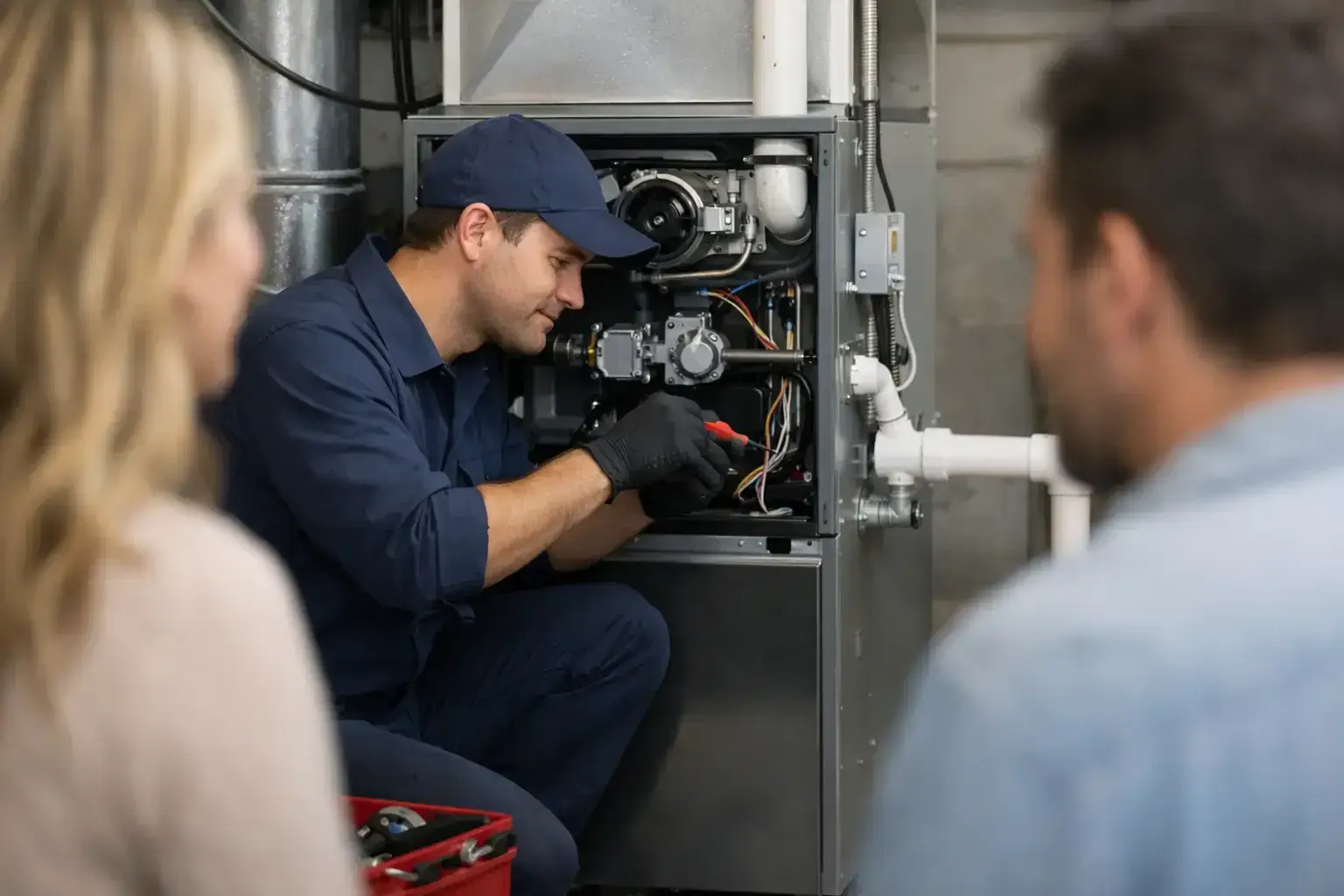
Furnaces rarely fail at a good time. It tends to happen on the coldest night of the year, when family is visiting, or right when tenants and customers expect a warm building. Regular maintenance is one of the best ways to catch small problems before they turn into an emergency call.
For a homeowner, that can mean avoiding a cold house, frozen pipes and a rushed decision about a new furnace. For landlords, condo managers and commercial property teams, it means fewer complaints, less downtime and more predictable costs. No tune-up guarantees a furnace will never need a repair. What it does is keep the system running safely and efficiently through a Toronto winter, with fewer surprises.
What happens during a furnace maintenance visit
A proper visit takes more than a new filter and a few minutes with the thermostat turned up. The technician checks the parts that affect how well the furnace heats, how much energy it uses and whether it runs safely.
It usually starts with a look at the furnace, the venting, the electrical connections and any ductwork that can be reached. The technician checks that the unit cycles correctly, puts out steady heat and responds to the thermostat. They also look at the filter, the blower, the burners, the ignition system, the safety controls and, on a high-efficiency furnace, the condensate drain.
On a gas furnace, the combustion side gets extra attention. The technician may inspect the heat exchanger for visible damage, confirm the venting is working, and look for corrosion, soot, moisture or a flame that doesn’t look right. If something needs a repair, you should get a plain explanation of what they found and what your options are.
Every furnace is different. A newer unit that was installed well may only need routine seasonal care. An older one may need a closer look at the igniter, blower wear, drainage or airflow. Either way, the point is to find problems early, when they are usually cheaper and easier to fix.
Why maintenance matters in Toronto
Toronto winters keep a furnace running for months. One that seems fine in October can show its problems once it runs day and night through a deep freeze. Dirty filters, weak igniters, blocked drains, worn belts, loose wiring and airflow problems tend to get worse under that kind of load.
Restricted airflow makes a furnace run longer than it should, leave some rooms cold, or shut itself down on a safety limit. A thermostat that reads wrong has people turning the temperature up without fixing anything. These complaints come up in detached houses, townhouses, older semis, condos, offices, stores and warehouses alike.
Maintenance can also help with energy bills, though how much depends on the furnace and the building. A tune-up won’t make an old or undersized furnace perform like a new high-efficiency one. It can stop the waste that comes from clogged filters, poor airflow, failing parts and controls that don’t work the way they should.
For commercial properties, more is at stake. A cold showroom puts customers off, and a cold office slows staff down. In a warehouse or industrial building, uneven heat can affect equipment, stock and the day’s work. Scheduled service gives facility managers a chance to deal with problems before they interrupt the business. Our article on commercial HVAC contractors in Toronto covers maintenance planning for businesses in more detail.
Signs your furnace should be checked sooner
Once a year, before the cold sets in, is a good baseline. Some symptoms shouldn’t wait for that appointment, though. Have a technician look at the furnace if it starts banging, rattling, whistling or grinding, if some rooms heat unevenly, if it runs nonstop, or if it turns on and off more often than it used to.
Higher gas bills with no change in how you use the house can point to an efficiency problem. So can a furnace that takes longer to warm the house, sometimes blows cool air, or needs the thermostat adjusted over and over. Take a yellow or uneven burner flame seriously, along with moisture around the unit or water near a high-efficiency furnace.
If you smell gas, suspect a carbon monoxide problem, or your CO alarm goes off, leave the house right away and call your gas utility or 911 from outside. Don’t try to diagnose a possible gas or combustion problem yourself. Once it’s safe, a qualified technician can inspect the furnace and find the cause. If the heat has already stopped, our guide to emergency furnace repair walks through what to do first.
Repair or replace?
A maintenance visit often leads to the question of whether the furnace should be repaired or replaced. The answer depends on the furnace.
Repair usually makes sense when the furnace is fairly young, the problem is a single part, and the rest of the system works well. A new igniter, pressure switch, blower part or thermostat can get it running reliably again for far less than a new installation.
Replacement is worth a closer look when repairs keep coming, parts are hard to find, running costs keep climbing, or the furnace is near the end of its life. A cracked heat exchanger or another serious safety problem can settle the question quickly. A good recommendation weighs the furnace’s condition, the repair cost, your efficiency goals, the layout of the property and your budget. The age on the label is only one part of it.
For a house, planning a new installation covers sizing, venting, the condition of the ductwork and whether your thermostat will work with the new furnace. For a commercial building, it can also cover occupancy schedules, zoning, rooftop equipment, ventilation and how to keep the work from disrupting the business. Work done to the manufacturer’s requirements and the applicable codes protects both performance and the warranty.
What you can do between visits
The technician handles the technical work, but a few habits make a real difference between appointments. Check the filter regularly during the heating season and replace it when it’s dirty or when the filter maker says to. A clogged filter restricts airflow and makes the furnace work harder than it needs to.
Keep the area around the furnace clear. Storage boxes, paint cans and cleaning supplies don’t belong next to heating equipment. Make sure supply and return vents aren’t blocked by rugs, furniture or merchandise. In a commercial building, ask staff not to cover vents or change thermostat settings without permission.
Test your carbon monoxide alarms and replace the batteries as recommended. They are an important safety backup, but they don’t replace an inspection of the furnace itself.
Book it before the cold arrives
The best time to book furnace service is before the furnace gives you a reason to worry. A tune-up tells you what shape the system is in, cuts down on surprise breakdowns, and lets you decide on a repair or replacement without a freezing house or workplace forcing your hand.
Expert Heating and Air Conditioning does furnace maintenance, diagnostics, repairs and installations for homes and businesses. Book your visit before winter, and you’ll know where your furnace stands before you depend on it every day.