
Warehouse HVAC Maintenance: A Plan That Prevents Downtime
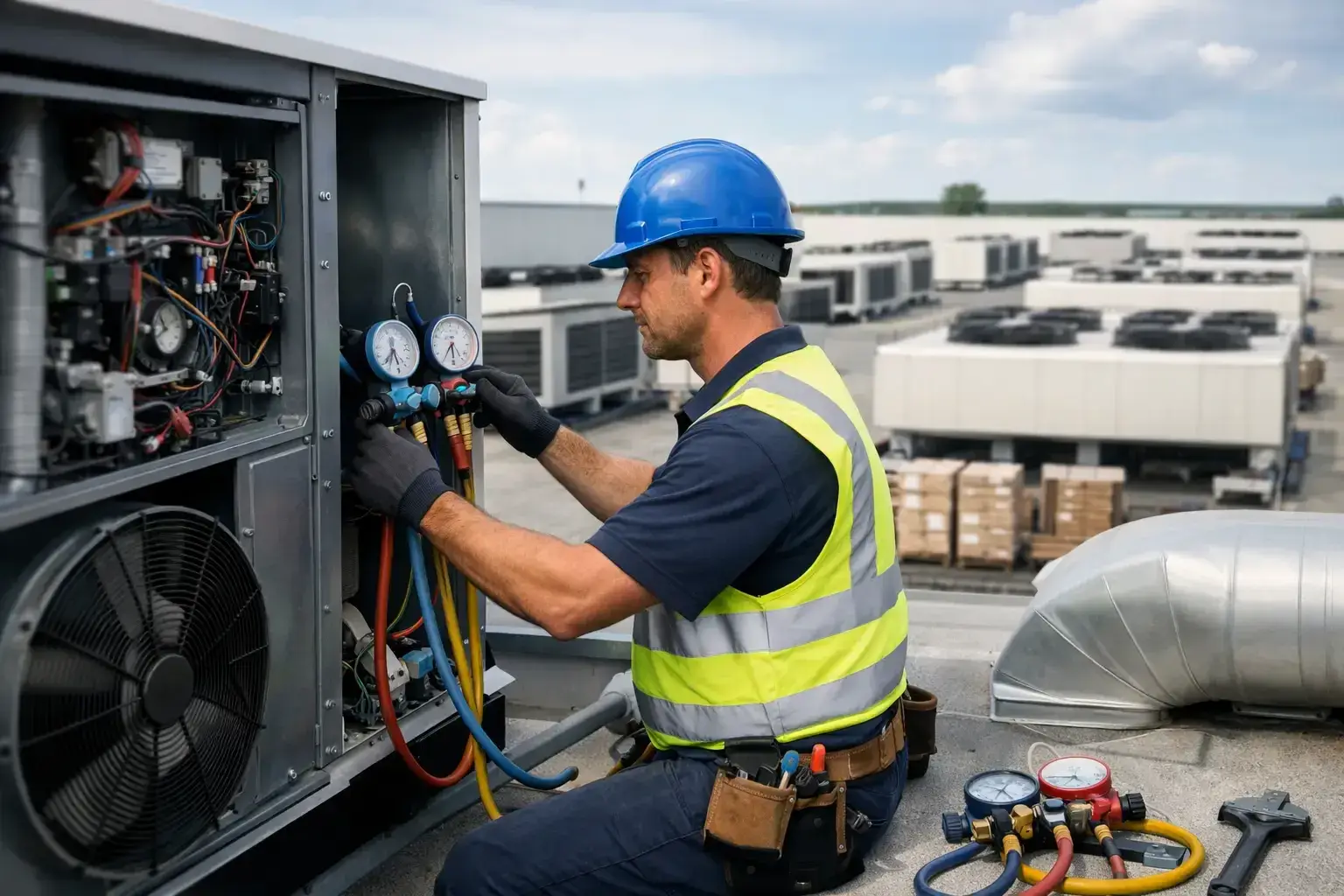
A warehouse can keep shipping orders when the office thermostat is a little off. It can’t run well for long when the dock crew is freezing, heat builds up over the racks, or a failed rooftop unit puts temperature-sensitive stock at risk. Regular HVAC maintenance lets facility managers head off those problems before they turn into expensive emergency calls.
For warehouses in Toronto, the GTA and nearby towns, HVAC upkeep affects much more than comfort. It affects staff safety, productivity, equipment reliability, the condition of your inventory and whether the operation keeps running. A maintenance plan should account for the building’s layout, operating hours, loading docks, ventilation needs and the equipment already on the roof or in the mechanical room.
Why warehouses are hard on HVAC equipment
Large open spaces need steady air movement, but high ceilings, rack storage, overhead doors and changing headcounts can create big temperature differences from one area to the next. A unit that seems fine near the thermostat can leave people at the loading dock uncomfortable all day.
Loading docks add another strain. Every time a dock door opens in January or on a humid summer afternoon, outside air pours in. That puts extra load on furnaces, air conditioners, make-up air units and controls. If the filters are blocked, the belts are worn or the dampers aren’t working, the system runs longer and still doesn’t deliver the heat, cooling or fresh air the space needs.
Neglect rarely costs just one repair bill. A breakdown can mean missed shifts, staff complaints, damaged stock, frozen pipes, wasted energy or an urgent service call at the worst possible time. Preventive maintenance lets you fix small problems on your schedule instead of reacting once the building is already uncomfortable.
What a warehouse maintenance visit should include
A useful visit goes well beyond a filter change and a quick check that the thermostat turns on. The technician should inspect the equipment your operation depends on and write down anything that could lead to a failure.
In a typical warehouse, that means rooftop units, furnaces, air conditioners, unit heaters, exhaust fans, make-up air equipment, thermostats and ventilation controls. The right scope depends on the building. A distribution centre with constant dock traffic has different priorities from a warehouse storing electronics, food, paper goods or dusty materials.
A thorough maintenance program usually covers:
- Replacing or cleaning filters, and checking their fit, airflow direction and change schedule.
- Inspecting belts, pulleys, motors, bearings, blowers and electrical connections for wear or overheating.
- Cleaning condenser and evaporator coils when dirt or debris is cutting performance.
- Testing heating operation, igniters, safety controls, gas connections and combustion where they apply.
- Checking refrigerant performance, condensate drains, compressors and cooling controls before hot weather.
- Confirming thermostat settings, schedules, sensors, dampers and zone controls match how the building is actually used.
- Inspecting ventilation equipment, exhaust paths and outdoor air settings that affect air quality and building pressure.
Small items matter. A dirty filter can cut airflow enough to overwork a blower motor, cause uneven temperatures and make a rooftop unit cycle badly. A loose belt can turn into no airflow at all. It’s far better to find either one on a scheduled visit than during a heat wave or a cold snap.
Don’t overlook ductwork and airflow
Many warehouse comfort complaints are airflow problems, not equipment failures. Leaky or disconnected ducts, blocked diffusers, damaged insulation and poor balancing can leave one area too hot and another too cold. Dust inside the ducts can also restrict airflow and hurt air quality, especially in buildings with heavy traffic, lots of cardboard or manufacturing work.
Not every building needs its ducts cleaned on the same schedule. It depends on what happens in the space and what an inspection finds. It’s worth looking into when staff complain about dust, the vents look dirty, airflow is weak, or the building has been renovated.
Plan maintenance around Ontario weather and your schedule
Seasonal timing works best for most buildings, with extra checks based on how hard the equipment runs. Have the heating equipment inspected before the cold sets in for good. Cooling equipment needs attention before summer pushes rooftop units into long, hard cycles.
Spring service is the time to get the air conditioning ready: inspect the coils, test the drains and confirm the controls are set for warm weather. Fall service focuses on furnaces, unit heaters, igniters, heat exchangers and safety controls. Buildings that run several shifts, store climate-sensitive goods or run ventilation around the clock may need more frequent visits.
Schedule the work around your warehouse’s flow as well. A good commercial HVAC team can plan inspections for quieter periods, arrange roof access and start with the equipment serving the most important areas.
Signs your warehouse needs service now
A maintenance plan cuts down on surprises, but you’ll still sometimes need a fast repair. Call for service when your team notices temperature swings that keep coming back, unusual noises, weak airflow, water around equipment, burning smells, breakers that keep tripping, or units that run nonstop without reaching the set temperature.
Other signs are easy to brush off until they become serious. Energy costs climb even though operating hours haven’t changed. One dock area stays cold while the rest of the building overheats. Staff bring in portable heaters because the installed system can’t keep up. These can point to failed controls, restricted airflow, worn parts, or equipment that’s no longer sized or set up for how the building is used.
When the heat fails in freezing weather or the cooling quits in a way that puts people or stock at risk, waiting for a routine visit may not be an option. A fast repair protects the operation while you work out a longer-term maintenance or replacement plan. Our guide to 24 hour HVAC service covers what to do while you wait for a technician.
Maintenance plans make budgeting easier
For facility managers, the biggest benefit of scheduled maintenance is knowing what’s coming. Instead of guessing which unit will fail next, you get regular inspections and can plan repairs before a part fails completely. Budgets become more predictable, and decision-makers have time to weigh repair costs against replacement.
Not every older unit needs replacing. If the repair cost is reasonable, the original manufacturer parts are available and the equipment otherwise performs well, repair may be the right call. Repeated failures, rising utility costs, parts that are hard to find or poor temperature control can make replacement the better long-term choice. The condition of the equipment should decide it.
A good maintenance provider explains findings in plain language, says what needs attention now and separates urgent repairs from items that can be watched. That lets property managers make decisions without being pushed into work they don’t need.
Choose a provider set up for commercial work
Warehouse equipment is bigger, more varied and often more critical than what you’d find in a small office. Look for a contractor with commercial experience, especially with rooftop and ventilation equipment, who follows the manufacturer’s requirements and the applicable safety codes.
A fast response matters, and so does follow-through. The right team arrives prepared, finds the root cause, uses quality parts and tells you what was done. A temporary fix that turns into another service call next month doesn’t help anyone.
Expert Heating and Air Conditioning works with warehouses and other commercial buildings on scheduled maintenance, diagnostics, repairs and installations. Set your maintenance schedule before the next busy season, and your team has one less emergency to deal with.