
24 Hour HVAC Service in Toronto: What to Do Until Help Arrives
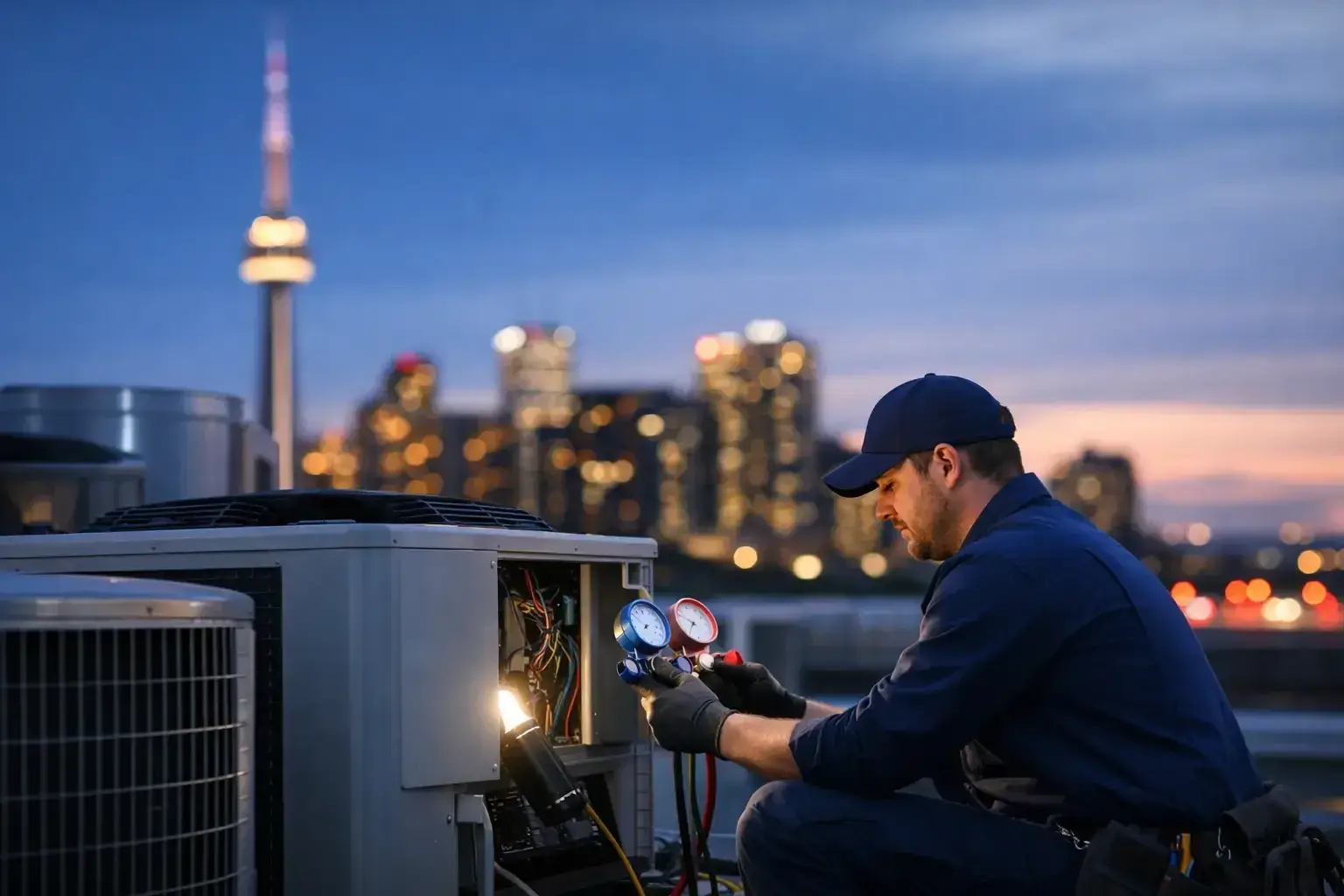
A furnace that quits at 2 a.m. during a Toronto cold snap can’t wait for business hours. Neither can an air conditioner that dies in a packed store on a humid July afternoon. When people’s safety, a building full of tenants or a shelf of stock is at stake, you need someone who will come at night and on weekends.
Speed is only part of it. The technician also has to find the real cause, explain your options in plain words, and make a repair that lasts past the next cold night.
Which HVAC problems can’t wait
Not every odd noise needs an overnight call. If the system still runs but seems weaker than usual, a regular daytime visit is usually fine. Extreme weather is what turns a breakdown into an emergency.
In winter, no heat is urgent when the indoor temperature keeps falling, when young children or older adults are in the house, or when pipes could freeze. In a commercial building, it quickly affects staff, tenants, customers and anything stored there. In a condo or rental, one dead unit can let the cold spread to the units next to it.
In summer, a failed air conditioner is hard on anyone with health problems, can shut down an office or showroom, and can damage equipment or products that need to stay cool.
Some problems are safety issues first. If the system keeps tripping a breaker, smells like something is burning, gives off smoke, or sets off a carbon monoxide alarm, get everyone out if needed, follow emergency guidance, and don’t use the system again until a qualified technician has checked it. If you smell gas, don’t look for the source or restart the furnace. Leave, don’t touch switches or use a flame, and call your gas utility or 911 from outside. Book the HVAC repair after that.
What to check while you wait
A few safe checks can solve a simple problem or give the technician a head start. Start at the thermostat: make sure it’s on Heat or Cool, the set temperature is right, and the batteries aren’t dead. Then check that the furnace or AC service switch is on and that no breaker has tripped. Reset a tripped breaker once. If it trips again, leave it off.
A badly clogged filter can choke the airflow, so replace it if you have the right size. That fixes some calls, but not most. Don’t keep resetting breakers, cycling the system on and off, or opening panels to look at wiring or gas parts. That can make the damage worse and put people at risk.
For an air conditioner, clear leaves, debris and snow away from the outdoor unit. If the indoor coil or the copper refrigerant line is iced over, turn the cooling off and let it thaw instead of forcing it to run. For a furnace, listen for clicking, a fan that runs with no heat, or nothing at all.
Write down when the problem started, any error code on the display, and anything that changed recently. Building managers should also note which areas are affected and whether it’s one unit or a whole zone, so the technician comes ready for the size of the job. Our guide to emergency furnace repair covers the furnace checks in more detail.
Why a quick restart isn’t a repair
Getting the system running again feels like a win. But furnaces and air conditioners often shut down to protect themselves: the airflow is blocked, a drain line is clogged, the ignition fails, or an electrical part is overheating. Restart it without finding out why and a small repair can turn into a big one.
An emergency visit should end with the cause found. Depending on the system and the symptom, that can mean checking electrical connections, capacitors, motors, ignition parts, sensors, the condensate drain, the thermostat wiring, the airflow, and the gas supply or refrigerant.
Whether to fix or replace depends on the equipment’s age, its condition and whether parts are still available. A newer furnace with a dead igniter is usually a quick fix. An older unit that keeps breaking down, has a failing heat exchanger, or needs an expensive major part may be worth replacing instead. You should hear what can be fixed tonight, what is likely to fail next, and whether the old system is still worth putting money into, without a sales pitch.
Homes, rentals and businesses
In a house, the priority is keeping the family warm and the pipes from freezing. In a condo, building rules and where the mechanical room is can limit what a technician can do and when. Landlords need someone who will talk to tenants clearly and fix the problem before it turns into complaints, damage claims or an empty unit.
For a business, every hour of downtime costs money. A store with no cooling loses customers, an office with hot and cold spots loses work, and a warehouse may need steady temperatures to protect stock or equipment. The technician needs experience in commercial buildings, and the goal there is keeping the business open as much as keeping people comfortable.
It helps when the company that handles the emergency also does your maintenance and plans the replacement when the system wears out. They already know your equipment and its history, so each later decision is easier.
Preventing the next late night call
Maintenance won’t stop every breakdown, but it cuts the odds. Furnaces and air conditioners rarely fail with no warning. Higher energy bills, rooms that never reach the set temperature, frequent on and off cycling, new noises, weak airflow and constant thermostat fiddling are all worth a service call.
A seasonal tune-up lets a technician catch worn parts, dirty coils, drain problems, loose wiring and airflow restrictions before the weather pushes the system hard. For most homes, that means servicing the furnace before winter and the air conditioner before summer. Commercial properties with several units often do better on a yearly service plan built around business hours and tenants.
Parts still fail without warning, especially on older equipment. Regular service does give you a clearer picture of what shape your system is in, so a repair or replacement bill is less likely to catch you off guard.
Choosing an emergency HVAC company
When the house is cold or the store is too hot, it’s tempting to call the first number you find. Ask a few questions first. Does someone actually answer and send a technician at night and on weekends? Does the company work on your kind of equipment and your kind of building? For gas appliances in Ontario, is the technician TSSA certified? Will they explain the problem and the price before they start, and what happens if the same problem comes back?
If your heating or cooling fails, get people safe first, skip the risky do-it-yourself fixes, and call for help early. A careful repair tonight can save you from a bigger bill later in the season.