
Repair or Replace a Rooftop Unit? How GTA Owners Can Decide
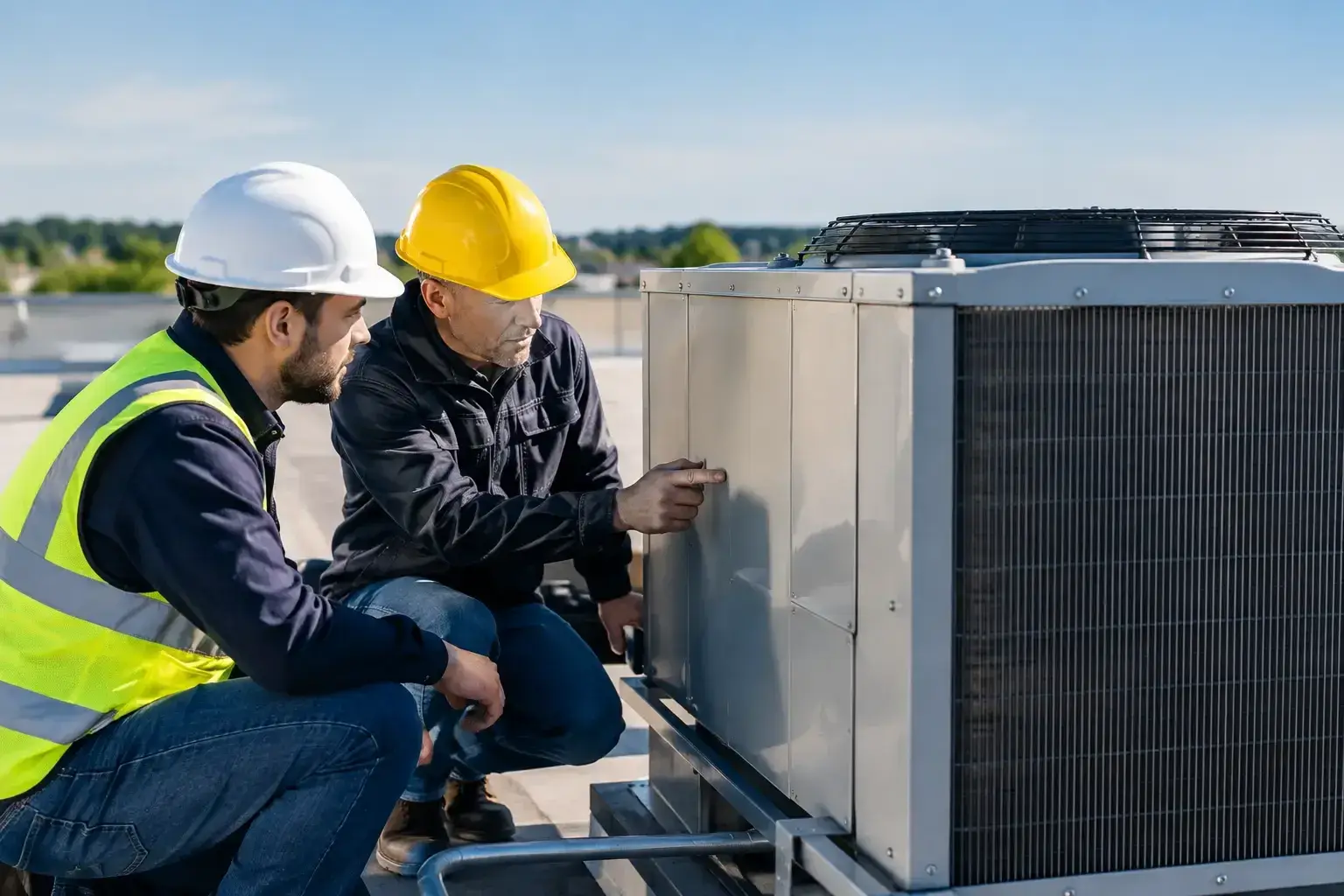
When a rooftop unit quits in a heat wave or leaves a store cold in January, the owner has to decide fast whether to fix it or replace it. The price of today’s service call is only part of that decision. The choice also affects tenant comfort, how well staff can work, operating costs, business hours and the odds of another breakdown at a bad time.
Offices, shops, warehouses, restaurants and multi-unit buildings across Toronto and the GTA lean hard on rooftop equipment. A technician can find the part that failed, but a useful recommendation also looks at the condition of the whole unit, its service history and what the building needs next.
Start with the condition of the unit
A repair call doesn’t mean the unit needs replacing. A failed capacitor, contactor, fan motor, sensor, thermostat control or loose electrical connection can often be fixed at a reasonable cost. If the unit has been maintained, heats and cools evenly and has no major damage, repairing it is usually the practical choice.
The picture changes when the repair turns up a bigger problem. A failed compressor, a damaged heat exchanger, a refrigerant leak in an old coil, control faults that keep coming back or heavy rust on the cabinet can all mean the unit is close to the end of its life. Those repairs can often still be done, but they cost more and may not make the unit reliable again.
A proper assessment goes past the part that broke. The technician should check operating pressures, electrical parts, airflow, the coils, drainage, combustion on gas-fired units, the controls, and the roof curb and connections. That fuller check shows whether you’re dealing with one failure or a unit that’s wearing out across the board.
When repairing the unit makes sense
Repair is often right when the unit is fairly young, the problem is isolated and maintenance has been regular. A well-kept unit with several good years left can usually justify a targeted repair, especially if replacing it would disrupt tenants or operations for no good reason.
Look at whether the unit still keeps up with the building’s heating and cooling load. If comfort complaints are rare, energy bills have stayed steady and the repair is small next to the cost of a new unit, there may be no reason to rush a replacement.
Check the manufacturer’s warranty too. If the failed part is still covered, the repair can cost a lot less, although labour, roof access, diagnostic time and related parts may still be billed.
Timing can also favour a repair. If a replacement would land in your busiest season, during a tenant move-in or in the middle of daily operations, a solid repair can buy time. It has to be a solid repair, though. If a fix is only temporary, the technician should say so plainly and you should plan for what comes next.
Fix the cause, not just the part
Be careful when a unit has needed several emergency visits for the same kind of problem. Swapping the same component again and again without finding out why it fails gets expensive. Electrical faults, poor airflow, dirty coils, the wrong refrigerant charge or failing controls can all put extra strain on other parts of the system.
Ask what failed, why it probably failed, what the repair covers and what risks are left. Straight answers make it easier to tell a sensible repair from money spent to delay a replacement by a few months.
Signs it may be time to replace the rooftop unit
Commercial rooftop units can run for many years, but age is only one factor. A neglected unit can wear out early, while one that gets regular professional maintenance may keep going longer. Replacement deserves a serious look when age, repair frequency and energy use all start pointing the same way.
Replacing the unit may be the better choice when:
- It has a major component failure and is near or past its expected service life.
- Repairs have become frequent, costly or hard to schedule around business hours.
- It can’t hold steady temperatures across the space.
- Parts are obsolete, hard to find or no longer supported by the manufacturer.
- Energy use has gone up with no change in how the building is used or in the weather.
- It no longer suits the building’s layout, occupancy or heating and cooling load.
A new rooftop unit does more than end the breakdowns. You get better controls, more even comfort, quieter operation and equipment sized for the building as it is today. That counts for a lot after a renovation, an expansion, a change in tenants, or a warehouse, showroom or office being converted to a new use.
Compare total cost, not just the next invoice
The cheapest repair isn’t always the cheapest choice over the next few years. New equipment isn’t automatically the smart choice either. The fair comparison is the total cost of owning the unit.
Start with the repair estimate, then think about what else is likely to fail. A unit with a failing compressor often has old motors, controls, coils and wiring too. If several major parts are near the end of their life, putting a large sum into one repair gets hard to justify.
Then count downtime. A shop with no cooling loses customers. An office with uneven heat gets complaints and people get less done. In a warehouse or plant, poor temperature control can affect staff, processes or stored goods. None of that shows up on the repair invoice, but it still costs money.
Energy use matters as well. Older units tend to use more power, especially when coils are worn, airflow is restricted, controls are dated or the unit has to run longer to reach its setpoint. A well-chosen replacement can lower operating costs, but any savings estimate should be based on your building, how it’s used and the equipment you have now.
Choosing a replacement means sizing it for the building
A new unit has to match the building’s heating and cooling needs, electrical capacity, ductwork, ventilation requirements, controls and roof curb. A unit that’s the wrong size can short-cycle, waste energy, leave humidity too high or leave parts of the building uncomfortable.
That’s why a site visit matters. An experienced commercial HVAC team should review the equipment specs and the building before recommending a replacement. In Ontario, the installation has to follow the manufacturer’s requirements and the applicable CSA and TSSA rules for electrical, gas, condensate, ventilation and safe roof access.
A replacement is also a good time to look at controls. Programmable or smart thermostats, zoning changes and better scheduling can stop the unit from heating or cooling empty areas or working harder than it has to. Not every building needs them, but they’re worth discussing when you’re already spending money on new equipment.
Maintenance history often settles the question
Maintenance records often say more than the unit’s age. They show whether filters were changed, coils cleaned, electrical connections checked, refrigerant levels tested and small problems fixed before they became big ones. They also show patterns, like refrigerant that keeps running low, blower trouble that keeps coming back or a unit that needs a service call every peak season.
For property managers with several sites or several rooftop units, scheduled maintenance works as an early warning. Instead of waiting for an emergency, you can spot the units that are becoming unreliable and budget for replacements before they disrupt operations. You then get to choose the timing, the equipment and the install date.
Get a recommendation built around your building
A good HVAC contractor won’t push you toward replacement when a repair will do the job, and won’t keep patching a unit that has clearly become a liability. You should get the facts: what failed, what the repair costs, what shape the rest of the unit is in and what a replacement would fix.
Your HVAC Expert works with commercial property owners and managers across the GTA on these decisions through our commercial HVAC services, with a clear diagnosis and a practical recommendation for each unit. Whether the problem shows up as a breakdown or during a planned inspection, the aim is to get the building comfortable again without spending money on the wrong fix.
When a rooftop unit fails, don’t let the pressure of the moment make the decision for you. A thorough assessment will show whether a focused repair will keep the unit running reliably or whether replacing it now will spare you a bigger disruption later.