
Smart Thermostat Installation in Toronto: What to Check First
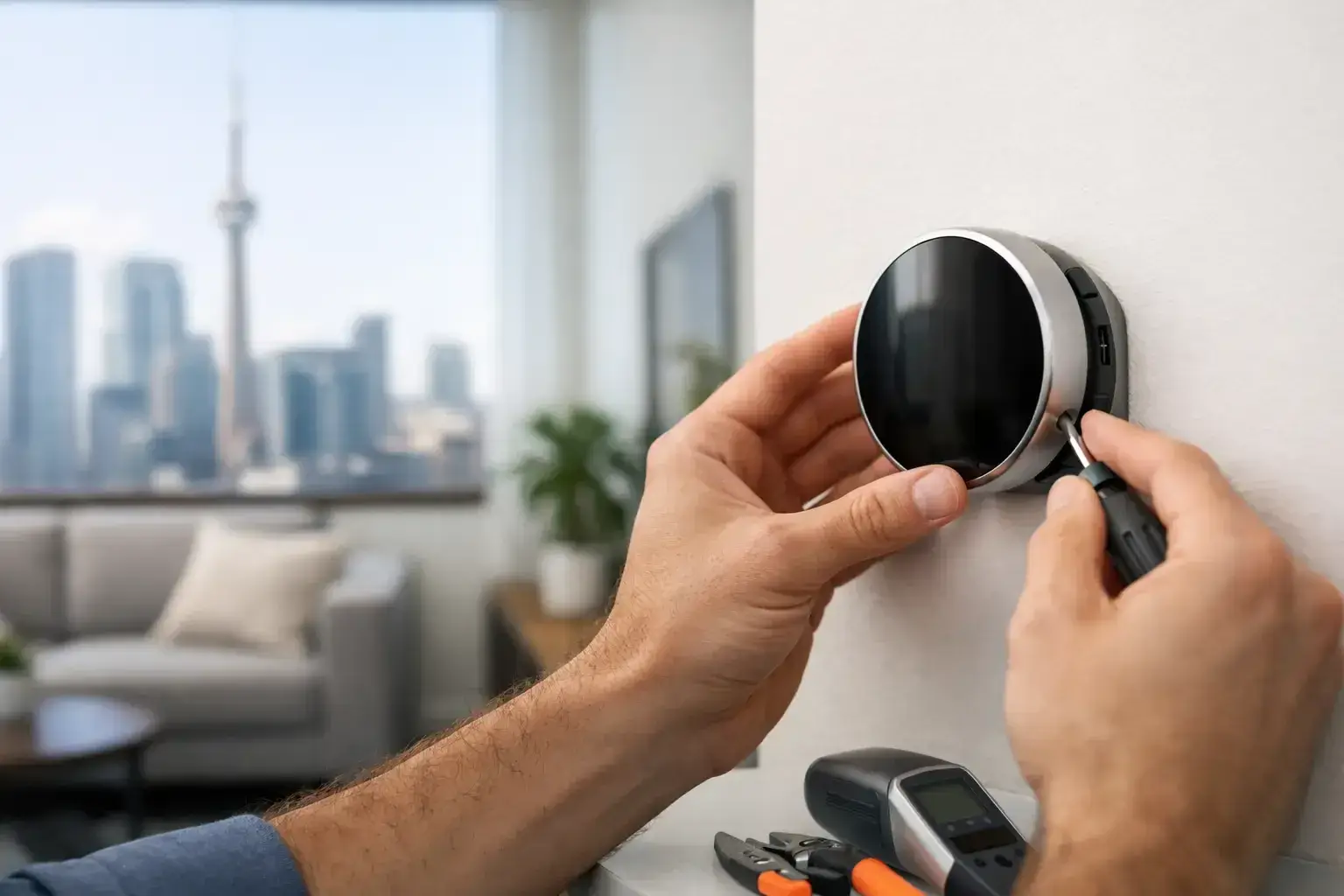
A smart thermostat seems like a small upgrade until your furnace runs too long on a mild winter day, your AC struggles through a humid Toronto afternoon, or your condo never feels quite right. Most people who ask about smart thermostat installation want better control over comfort and energy use, and an HVAC system that keeps up when the weather turns. The new screen on the wall is the least of it.
A good smart thermostat lets you change the temperature from your phone, set schedules around work and school, and get reminders to change the filter or book service. The wrong model, or a rushed install, can leave you with a blank screen, equipment that short cycles, no heat or an air conditioner that won’t start. Check compatibility before anything else.
Is a smart thermostat worth it?
Toronto has big seasonal swings. Furnaces work hard all winter and air conditioners carry the load through hot, sticky summer stretches. A schedule can cut runtime while the place is empty and bring it back to a comfortable temperature before people get home.
Smart models also show you more. Depending on the model, you can see how long the heat or AC ran, get alerts when the temperature leaves a range you set, and make changes when you’re away. That helps landlords, property managers, snowbirds and business owners who look after more than one location.
You can save money, but it isn’t automatic. A thermostat can’t repair a failing furnace, clear blocked ductwork or make an undersized air conditioner cool a sunny top-floor condo. It works best on a well-maintained system. If your equipment is already struggling, get a proper diagnosis first.
Smart thermostat installation in Toronto starts with compatibility
Not every smart thermostat works with every heating and cooling system. A technician should answer that question before you buy, not after.
Many homes with a standard furnace and central air are good candidates. These systems usually run on low-voltage thermostat wiring with heating, cooling, fan and constant power connections. The constant power wire, often called the C-wire, matters because many smart thermostats need steady power to work reliably.
Some properties need a closer look. Older homes may have few wires behind the thermostat. Condos can use fan coils, heat pumps or building-controlled systems with their own requirements. Homes with boilers, radiant heat, humidifiers, ventilation controls, multi-stage furnaces, zoning panels or dual-fuel systems may need a specific model and more careful setup.
Commercial systems add another layer. A store, office, warehouse or showroom may have rooftop units, several zones or controls tied into a building management system. Swapping a thermostat without understanding how those controls work together can affect comfort, equipment runtime and the business itself, so plan around the whole HVAC setup.
Don’t guess on the C-wire
A missing C-wire doesn’t always rule out a smart thermostat, but don’t solve it by guesswork. Depending on the equipment and the thermostat, a technician may run a new wire, use an approved adapter or suggest a different model. The right fix depends on the furnace, air handler, heat pump and existing controls.
Wrong wiring can blow a low-voltage fuse, damage a transformer, cause the system to work only some of the time, or stop heating and cooling calls from reaching the equipment. That turns a comfort upgrade into an emergency service call.
What a professional install should include
A proper install takes more than pulling off the old thermostat and matching wire colours. Colours aren’t always consistent, especially in older homes or after past repairs, so a proper installation checks each terminal and what it controls.
The technician starts by looking at the existing system, the thermostat wiring and the power source, and confirms the new thermostat supports your equipment type and number of heating and cooling stages. Then they shut the power off safely, label and connect the wires, mount the thermostat securely and turn the power back on.
Next comes configuration, where a lot of DIY installs go wrong. The thermostat has to be told whether it controls a furnace, boiler, heat pump, fan coil or something else. Settings for single-stage or multi-stage heat, the heat pump reversing valve, fan operation and auxiliary heat must match the actual system.
Last, the system gets tested in heating and cooling mode when the weather allows. The technician checks that the furnace starts and stops properly, the blower responds and the air conditioner gets the right call. Wi-Fi, the app, the schedule and a quick walkthrough for you finish the job.
At Expert Heating and Air Conditioning, the goal is a thermostat and equipment that work together. We follow the manufacturer’s installation requirements, so your comfort doesn’t depend on a lucky wire connection.
Picking features that fit how you live
The best smart thermostat isn’t always the one with the most features. Start with how you use the space.
For a detached home with a regular weekday routine, solid scheduling, remote control and maintenance reminders may be all you need. A household with changing schedules may like occupancy sensing, geofencing or room sensors that help with hot and cold spots. Room sensors help, but they won’t fix poor airflow balance, weak insulation or blocked ducts.
Condo owners should check equipment compatibility carefully. Some fan coil units have several fan speeds or controls a standard home thermostat can’t handle. Confirm your exact system with an HVAC technician before you buy.
In rental properties, remote access and temperature alerts give owners peace of mind in cold weather. Agree on access and privacy with tenants up front. For commercial spaces, steady business-hour schedules, locked-down permissions and reliable operation usually matter more than consumer features.
Common problems after an upgrade
If a new smart thermostat doesn’t behave the way you expected, don’t assume the device is faulty. A new thermostat can expose an HVAC problem that was already developing.
Short cycling can come from the wrong setup, a wiring fault, an oversized system or a furnace safety problem. Uneven temperatures can come from duct design, closed registers, dirty filters, weak airflow or a thermostat in a bad spot. Near a sunny window, an outside door, the kitchen, a supply vent or a draft, it will misread the room and run the system at the wrong times.
Wi-Fi dropouts are annoying, but they usually affect only the remote features, not the basic call for heat or cooling. If you have no heat or no AC after an install, turn the system off and call for service instead of changing settings over and over. Repeated resets make the problem harder to diagnose.
Looking after the system once it’s in
A smart thermostat works best when the equipment behind it gets regular care. Change filters on the schedule that suits your system and household, keep supply and return vents open and clear, and book seasonal maintenance so a technician can check electrical connections, safety controls, drainage, airflow and overall performance before extreme weather.
The thermostat’s data helps here. If heating runtime suddenly climbs, cooling takes longer than usual or some rooms feel different than they used to, deal with it early. A small service visit is much easier than losing heat on a freezing night or AC in a heat wave.
Choose a model that fits your equipment, have it installed and set up correctly, and use what it tells you to catch HVAC problems early.