
Duct Cleaning in Toronto: When It Helps and When It Won't
Your furnace can run all day in a Toronto winter while one bedroom stays cold, the living room gets dusty two days after you clean it, and a few vents blow stale-smelling air. None of that proves you need professional duct cleaning, but it’s worth looking into. Ducts carry heated and cooled air through the house, and when they’re restricted, dirty, damaged or badly connected, comfort and system performance drop.
Duct cleaning won’t fix every HVAC problem. A dirty filter, a failing blower motor, an undersized return, a leaky duct joint or a thermostat fault can all cause the same symptoms. A good technician looks at the whole system, works out what’s actually going on, and only recommends cleaning when it will help.
What professional duct cleaning does
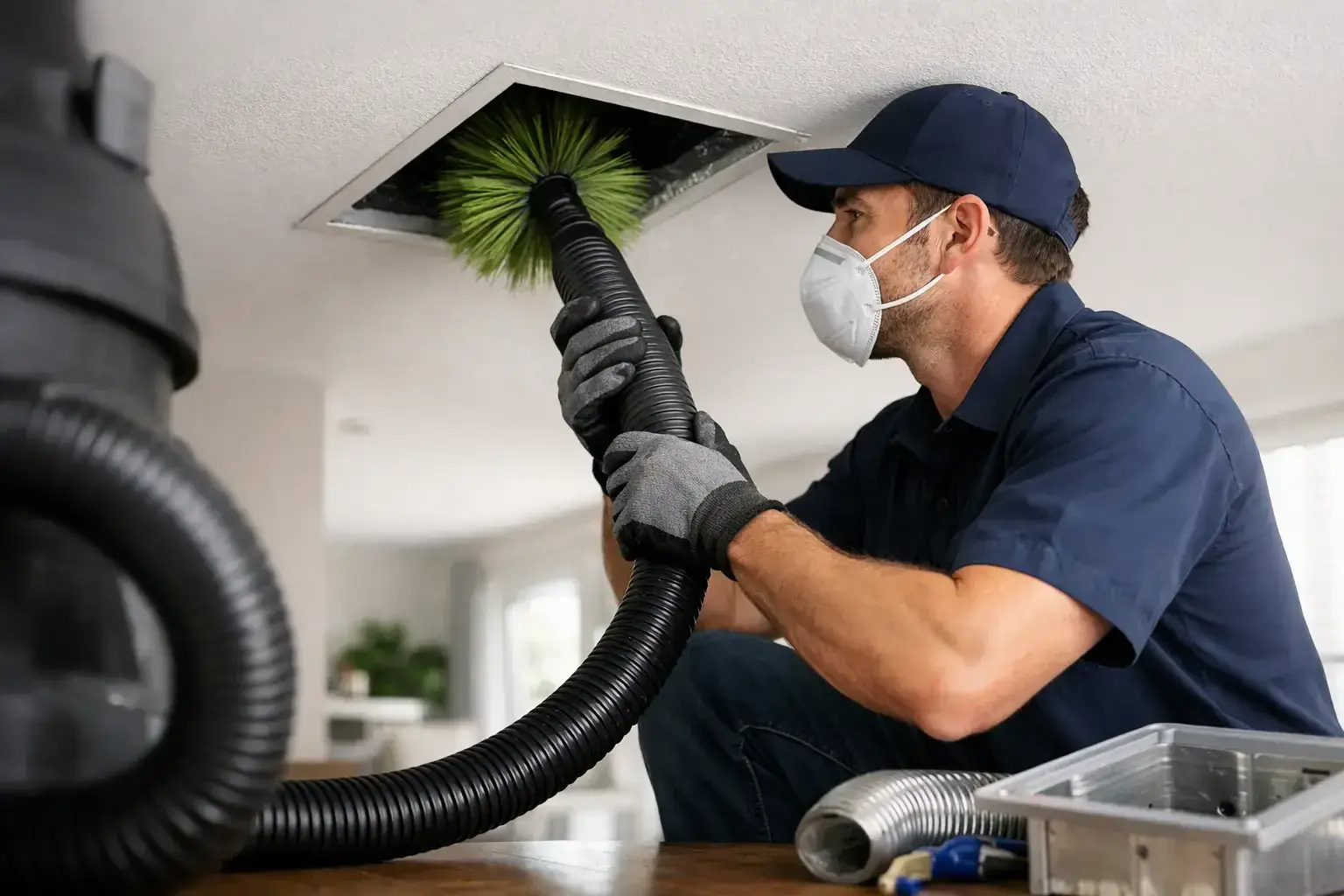
Duct cleaning removes built-up dust, lint, debris, pet hair and other loose material from the supply and return ducts that can be reached. The crew uses negative-air equipment to put the ducts under suction and brushes or air tools to knock debris loose, so it gets pulled out of the system instead of pushed further down the line.
The job can also cover parts that affect airflow, such as return grilles, supply vents and, where it makes sense, the blower compartment. Ask for the scope before work starts, because every property is different. A condo with short duct runs needs less than a detached house on several floors, and a warehouse ventilation system takes a different kind of planning altogether.
Cleaning doesn’t repair crushed flex duct, disconnected sections, big air leaks, poor system design or a furnace with a mechanical problem. If the inspection turns up one of those, fixing it will usually do more for you than cleaning alone.
When duct cleaning makes sense
No calendar rule fits every Toronto home. Renovations, pets, a full house, smoking and construction dust all speed up buildup, while some homes go years without much. The condition of the system matters more than a fixed schedule.
Cleaning after a renovation is often a good call. Drywall dust and sawdust travel through return vents fast, especially if the heating or cooling ran during the work. Even careful contractors can’t keep every particle out.
It’s also worth considering when you move into a home or commercial space someone else used. You may not know whether the last occupants had pets, smoked inside, renovated or ever changed the filter. A cleaned and inspected system gives you a known starting point for maintenance.
Signs to watch for:
- Dust or debris blowing out of vents, or collecting around registers soon after you clean.
- Uneven airflow between rooms after you’ve ruled out simple causes like a blocked vent or a dirty filter.
- A musty or stale smell when the furnace or air conditioner starts.
- Debris you can see inside the return ducts, especially after construction or water damage work.
- Heavy lint in the dryer vent. That’s a separate cleaning job, but don’t ignore it.
For commercial property managers, the reason to clean is often about operations rather than looks. A retail space with dusty ceilings, an office with ongoing comfort complaints or a warehouse that just went through a fit-out can all benefit from an assessment. Clean ducts are only one part of indoor air quality, but they help keep the HVAC system in better shape.
Why you shouldn’t ignore airflow problems
Furnaces and air conditioners are built to move a set volume of air across their parts. When clogged filters, blocked grilles, debris or damaged ducts restrict the return, the equipment runs longer and keeps you less comfortable.
Dirty ducts aren’t always behind a high utility bill or a weak vent. Duct leaks, poor insulation, a failing capacitor, low refrigerant or an aging furnace can be more likely causes, depending on the season and the symptom. A technician shouldn’t promise that cleaning will fix a comfort problem before looking at the system.
A proper assessment separates cleaning needs from repair needs. If the blower compartment is dirty, the filter has been ignored and you can see debris in the return duct, cleaning may be part of the answer. If airflow is strong at the furnace but weak upstairs, look for a duct restriction, a damper setting, a design limit or a branch line that has come loose.
What to expect from a good duct cleaning company
A useful appointment starts with questions. Has there been construction? Do you have pets? Which rooms are uncomfortable? Is the main concern dust, odour, allergies, weak airflow or debris you can see? The answers tell the technician where to focus.
Before cleaning starts, the crew should explain where they’ll access the ducts, what equipment they’ll use and which parts of the system they’ll clean. The negative-air machine keeps the ducts under suction while tools loosen debris from the duct walls. Registers and returns should be covered and handled with care, especially in finished homes, condos, offices and showrooms.
Recommendations should be straightforward too. If the filter needs replacing, they should say so. If a return duct is damaged, they should show you why it needs repair. If the ducts are fairly clean and the real problem is a faulty furnace part, the conversation should turn to repair, not add-ons you don’t need.
Be careful with very low advertised prices that turn into high-pressure visits. A duct cleaning quote should spell out what’s included and whether extra vents, furnace cleaning, hard access or dryer vent service cost more. A clear scope and clear pricing prevent surprises.
Duct cleaning in Toronto homes and condos
Toronto housing runs from older detached homes with basement ductwork to high-rise condos with compact fan coil units. Access, building rules, equipment layout and ventilation design all change how the job is done.
In a detached home, the crew may have to work around a finished basement, a tight mechanical room and long branch runs. Older ductwork can need careful handling. If it’s aging or poorly sealed, cleaning is a good time to find the sections that need repair or insulation.
Condo owners should find out what equipment serves their unit and what the building allows. Some buildings have fan coil systems, shared ventilation or limits on when contractors can come in. A technician who knows the difference can tell you what can be cleaned inside your unit and what is the building management’s job.
For landlords and property managers, a record of cleaning between tenants makes turnover cleaner and shows the next occupant that the heating and cooling system was looked after.
Keeping the system clean after service
Duct cleaning works best alongside regular HVAC maintenance. Day to day, the most important thing is a filter of the right size, changed on schedule. A filter that’s too restrictive cuts airflow, and one left in too long becomes a source of dust and strain.
Keep furniture, rugs and stored boxes away from supply registers and return grilles. Vacuum the grille covers now and then, and watch for water around the furnace, air handler or air conditioner. Deal with moisture quickly, because a damp or contaminated duct is a much bigger job than dry dust.
If you’re renovating, ask the contractors to cover the registers and, where possible, to keep the HVAC system off during dusty work. When the job is done, replace the filter and consider having the system inspected so fine construction dust doesn’t circulate through your home for months.
Next steps for your home or building
If your vents are visibly dirty, you’ve just renovated, or comfort problems continue after a filter change, book an HVAC assessment instead of guessing. Expert Heating and Air Conditioning can check your ductwork and equipment, tell you whether cleaning is worth it, and take care of any repairs or maintenance that are hurting airflow, so you don’t pay for work your system doesn’t need.