
Heat Pump vs Gas Furnace: Which Is Right for Your Home?
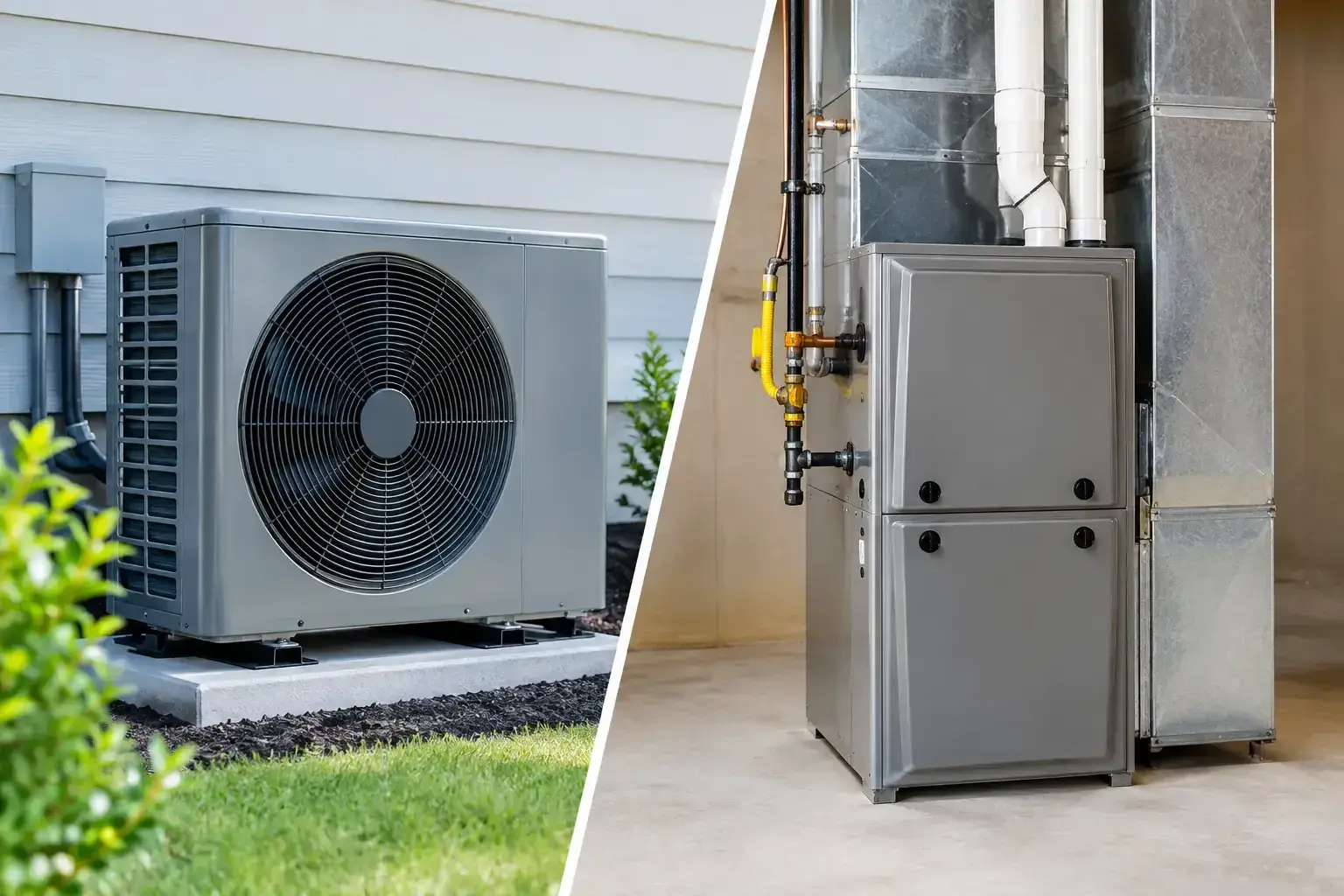
A January night with a dead furnace is a bad time to start researching heating systems. Whether you own a detached home in the GTA, have a condo unit or look after a commercial building, choosing between a heat pump and a gas furnace depends on the building, what you expect from it, local utility rates, and how much heat you need when it gets very cold.
A gas furnace is still a proven choice for many homes in cold climates. Cold-climate heat pumps have also become a real option for people who want efficient heating and summer cooling from one system. Neither is right for every home. What matters is that the system is sized, installed and maintained for your space.
How they work
A gas furnace burns natural gas to make heat and pushes that heat through your ductwork. It warms a house quickly, even in deep cold. High-efficiency furnaces use less gas than older models, but they still need a gas line, safe venting and regular checks of the burners and venting.
A heat pump doesn’t burn anything. It moves heat from the outdoor air into your home. Even cold winter air holds some heat, and current models can pull it in well below freezing. In summer the process runs in reverse, and the same system cools your house like a central air conditioner.
That difference changes running costs and whether you need backup heat. A furnace only heats. In some homes a heat pump can replace both the furnace and the air conditioner, or it can work alongside a furnace in what’s called a dual-fuel setup.
Performance in an Ontario winter
The question people ask most is whether a heat pump can handle a real winter. A well-chosen cold-climate heat pump can heat a house through much of the season. It’s a different machine from older heat pumps that struggled once temperatures neared freezing.
Output still drops as the temperature falls. In severe cold a heat pump makes less heat and uses more electricity to keep up. Some systems switch on electric backup heat. Others pair the heat pump with a gas furnace, so the heat pump handles milder days and the furnace takes over when it gets cold enough that gas makes more sense.
A gas furnace puts out more heat in a cold snap. It delivers hot air quickly, and the outdoor temperature barely affects it. For a drafty older house, a building that loses a lot of heat, or a property where steady high heat output comes first, a furnace may be the safer pick.
The equipment is only part of it. Leaky ducts, air leaks, thin insulation, the wrong size of unit or a badly placed thermostat can make any system disappointing. A proper heat loss calculation and a look at the whole system tell you more than a neighbour’s recommendation.
Energy bills depend on more than the equipment
Heat pumps are efficient because they move heat instead of making it. In mild weather they can deliver several units of heat for each unit of electricity they use. That can cut heating costs compared with electric baseboards or old, inefficient equipment.
What a gas furnace costs to run depends on its efficiency rating and the price of gas. A high-efficiency furnace turns most of its fuel into usable heat, which keeps it cheap to run in many homes on gas. Gas and electricity prices vary by area and change over time, though, so nobody can tell you in one line which system is always cheaper.
For many households the fairer comparison is a heat pump that heats and cools against a furnace plus a separate central air conditioner. If both your furnace and AC are near the end of their life, one cold-climate heat pump may simplify the replacement. If the AC is fairly new and only the furnace has failed, another furnace may make more financial sense.
Ask for estimated running costs based on your home’s size, insulation, duct condition, equipment efficiency and the backup heat you’d use. The cheapest installation isn’t always the cheapest choice over the next 10 to 15 years.
Installation costs and what your home may need
Swapping an old furnace for a new one is usually the simplest installation when the gas line, venting, electrical service and ductwork are already there. The price can still change if the venting is unsafe, the ducts need changes or the old unit was the wrong size.
A heat pump installation may need an outdoor unit, an indoor air handler or coil, refrigerant lines, a condensate drain, controls and electrical upgrades. Some homes need the electrical panel checked before adding a heat pump or electric backup heat. In a condo, where the outdoor unit can go, building rules and access all limit what’s possible.
For commercial properties, there’s more to consider. A store, warehouse, office or showroom may need zoning, rooftop equipment, make-up air or a staged replacement so the business keeps running. A system installed without regard for airflow and load leads to hot and cold spots, short cycling, extra wear and higher utility bills.
Comfort feels different with each system
A gas furnace usually sends warmer air out of the vents. Plenty of people like that quick warmth after coming in from the cold. Furnace cycles tend to be shorter and stronger, especially when you turn the thermostat up a few degrees.
A heat pump usually runs longer at lower output. The air from the vents may not feel as hot, but the house holds a steadier temperature with fewer swings. Many homeowners like that, though it can take getting used to if you’re used to a furnace.
Noise, humidity and thermostat settings also make a difference. An oversized system turns on and off too often. An undersized one runs all the time and still falls behind in extreme cold. That’s why a room-by-room assessment is worth more than buying the biggest unit available.
Both need regular maintenance
Either system needs regular maintenance. On a furnace, a technician should check the burners, the heat exchanger, venting, safety controls, filter and airflow. Because it burns fuel, safety comes first. Any home with gas appliances needs working carbon monoxide detectors.
A heat pump needs clean filters, clear space around the outdoor unit, refrigerant and electrical checks, coil cleaning and working defrost controls. Keep snow, ice, leaves and debris off the outdoor unit. Since it runs all year, it also needs a check before cooling season.
For landlords and property managers, planned maintenance makes it less likely that a no-heat call turns into an after-hours emergency. For businesses, it keeps the building open and protects staff, customers and temperature-sensitive stock. Following the manufacturer’s service requirements and using the right parts also protects the warranty.
When dual fuel makes sense
A dual-fuel system is often the compromise for cold-climate homes that already have natural gas. It pairs a heat pump with a gas furnace, and the controls choose the better heat source based on the outdoor temperature and your settings.
You get efficient electric heat in mild and moderately cold weather and the furnace’s full output in a deep freeze. It’s worth a look when an aging AC and furnace both need replacing but you don’t want to depend fully on electric backup heat.
The downside is more equipment and a higher upfront cost than replacing one unit. The controls have to be set up correctly, and the installation has to meet manufacturer, electrical, gas and safety requirements. A badly set up dual-fuel system can lose the advantages of both.
Choosing for your property
A gas furnace fits best when you want fast, hot heat, a lower upfront cost, use of your existing gas service and strong performance in extreme cold. It suits older homes, buildings that lose a lot of heat, and properties where the separate air conditioner still has years left.
A cold-climate heat pump fits when you want one system for heating and cooling, your home is well sealed and insulated, and you’re comfortable weighing electricity costs and backup heat. It’s a good long-term choice, especially when both heating and cooling equipment are due for replacement.
Dual fuel fits when you want heat pump efficiency and still want a gas furnace for the coldest nights. Whatever you lean toward, the assessment should cover your ducts, insulation, electrical capacity, existing equipment and the rooms that are hardest to keep comfortable.
Expert Heating and Air Conditioning installs furnaces, heat pumps and dual-fuel systems in Durham Region, Toronto and across Southern Ontario. Before you replace anything, we’ll look at your home’s heat loss and airflow and explain the options that fit it.