
Furnace Repair Near Me: What to Check Before You Call
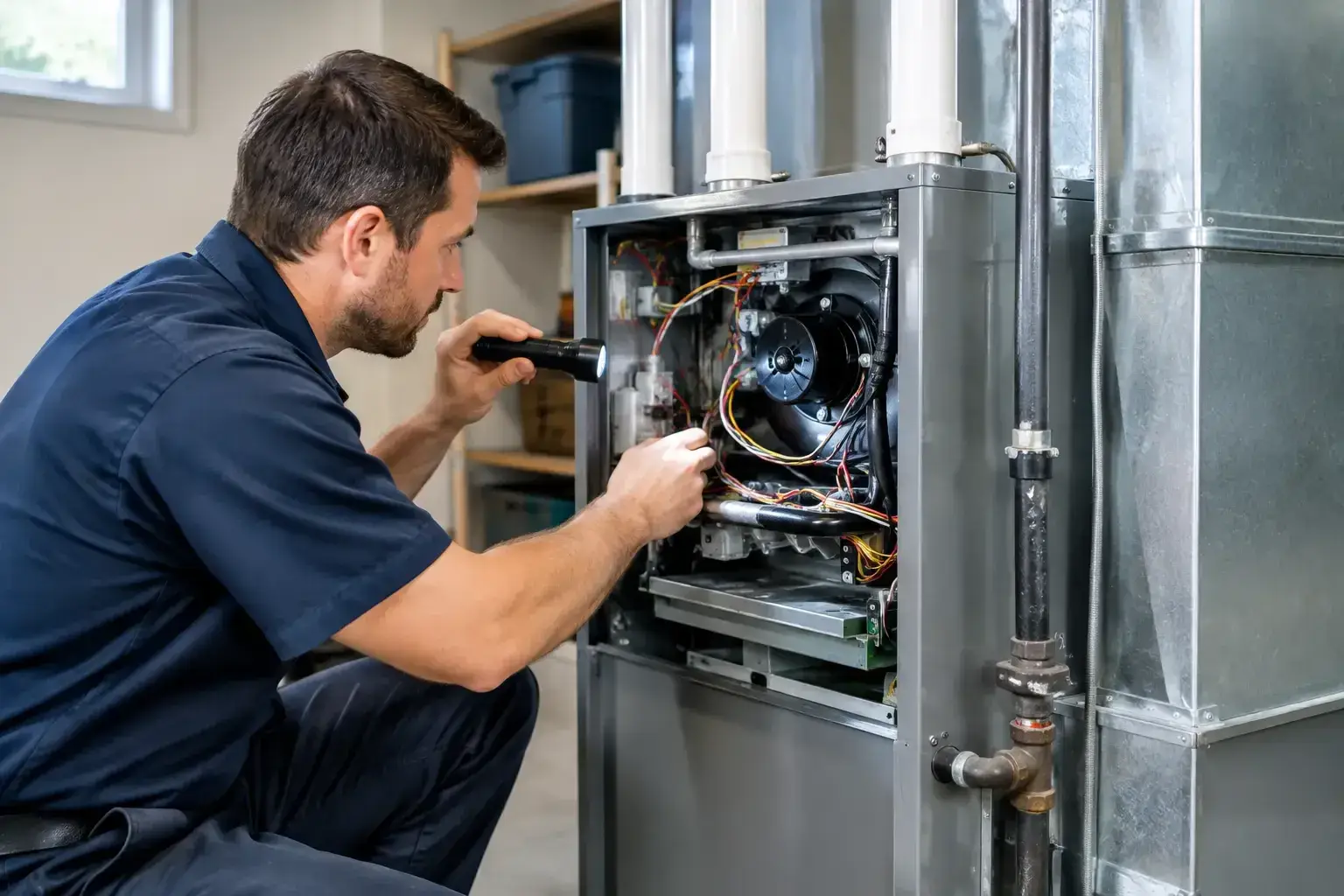
A furnace rarely fails at a good time. It’s usually early in the morning, in a cold snap, or just when family, tenants or customers expect a warm space. When you search for furnace repair near you, you need a team that can find the problem quickly, explain the repair plainly and get the heat back on safely.
For homeowners, landlords and business owners in Toronto and the GTA, a no-heat call can lead to frozen pipes, unhappy tenants, a disrupted business or damaged stock that has to stay warm. A fast response matters, and so does getting the diagnosis right the first time.
What to check before you call
A few safe checks are worth doing before you book a service call. Sometimes they fix a small problem, and if they don’t, they give your technician useful information.
Start with the thermostat. Make sure it’s set to Heat and that the setting is a few degrees above the room temperature. If the screen is blank, it may need new batteries or may have lost power. In condos and businesses with programmable thermostats, check that a schedule hasn’t dropped the temperature.
Next, look at your electrical panel. A tripped furnace breaker can stop the system even when everything else in the building has power. Reset it once if you need to. If it trips again, leave it off and call for furnace repair. A breaker that keeps tripping can point to an electrical fault.
Check the furnace switch too. Most furnaces have a switch nearby that looks like an ordinary light switch, and it’s easy to flip off by accident while cleaning, storing things or renovating. Last, look at the air filter. A badly clogged filter blocks airflow, can make the furnace overheat and may shut it down on a safety limit.
Don’t remove panels, disconnect gas lines, bypass safety controls or keep resetting the furnace. If you smell gas, leave the building right away, don’t touch light switches or use anything with a flame, and call your gas utility or 911 from outside.
Signs your furnace needs a technician
Some problems are obvious, like a furnace that won’t turn on. Others build slowly, which gives you a chance to book a repair before the furnace stops completely.
Cold air from the vents is a common complaint. The cause could be the thermostat setting, a dirty filter, an ignition problem, a dirty flame sensor or a failing control board. It depends on the furnace and on what happens during startup. A proper diagnosis means you don’t pay for a guess.
Unusual noises are worth a call as well. Banging can come from ducts expanding or from delayed ignition. Squealing can mean a worn blower belt or motor. Rattling might be a loose panel, or it might be a part on its way out. A furnace shouldn’t be loud enough to interrupt a conversation or wake people at night.
Watch how often it cycles. If the furnace turns on and off every few minutes, it may be overheating, getting bad readings from the thermostat or fighting restricted airflow. Short cycling wears out parts, uses more energy and leaves some rooms colder than others.
In commercial buildings, the warning signs often show up in one area. A showroom may feel cold near the doors, an office wing may never reach its setting, or a warehouse may have heat but poor air movement. The cause could be the furnace, the ducts, the controls, the dampers, the rooftop equipment or how the whole system is balanced. That’s why commercial service takes more than swapping a part.
Why a quick repair protects your property
Waiting until a furnace dies completely can turn a modest repair into an emergency. In an Ontario winter, indoor temperatures drop fast, especially in older homes, empty rental units, warehouses and buildings with pipes along outside walls.
A struggling furnace also burns more gas. When the burners, sensors, motors, filter or airflow aren’t working right, the system runs longer and still doesn’t deliver the heat you expect. You pay more on your gas bill, and the extra running wears down equipment that may already be near the end of its life.
For landlords and property managers, prompt repairs keep tenants comfortable and complaints down. For businesses, reliable heat keeps staff and customers comfortable and protects equipment and inventory. A store with a cold sales floor or an office with no heat can’t wait for a convenient weekday appointment.
Repair or replace?
Repair is often the sensible choice when the furnace is fairly new, has been maintained and has one clear fault, like a failed igniter, pressure switch, blower part or control. Manufacturer (OEM) parts that carry a warranty fit properly and keep the furnace running as designed.
Replacement is worth talking about when repairs keep coming, the furnace is near or past its expected life, or a major part has failed. A cracked heat exchanger is a serious safety problem and often means replacement instead of repair. The answer also depends on efficiency, repair history, whether parts are still available and whether the furnace was sized properly for the building.
A good technician won’t push you into a new furnace just because a repair is awkward. They should explain what shape the equipment is in, what the repair will cost and what each option gets you. For a home, that includes comfort and monthly gas bills. For a business, it also includes downtime, maintenance planning and keeping the doors open.
What a proper repair visit looks like
A good repair visit starts with questions. The technician should ask when the problem started, whether it’s constant or comes and goes, what sounds or smells you noticed, and whether anything changed recently with the thermostat, filter, electrical system or building.
Then they should work through the furnace step by step: the thermostat signal, the power supply, error codes, the ignition sequence, burner operation, the flame sensor, venting, pressure switches, condensate drainage on high efficiency units, the blower and the safety controls. The point is to find the cause, not just restart the furnace and leave.
Before any work goes ahead, you should hear what failed, what repair is recommended and what it will cost. If the technician spots other problems, such as leaky ducts, weak airflow or an old thermostat, those should come as recommendations you can decide on, not surprise charges.
Expert Heating and Air Conditioning repairs furnaces in condos, detached homes, rental properties and commercial buildings. On every call, we find the cause, explain it and get the heat back on safely.
Preventing the next no-heat call
The best time to service a furnace is before the first real cold spell. A yearly maintenance visit lets a technician clean the important parts, test the safety controls, check airflow, change or recommend a filter and find worn parts before they leave you without heat.
Maintenance can’t promise a furnace will never fail. Parts wear out without warning, and severe cold pushes every heating system hard. Regular service still cuts the chance of a breakdown you could have avoided and tells you what condition your system is in.
For property managers and business owners, a scheduled maintenance contract makes planning easier. Instead of reacting to each breakdown, you can track the equipment’s condition, book service around business hours and budget for repairs or replacement.
If your furnace is making strange noises, cycling constantly, blowing cool air or not keeping the space warm, call before the temperature drops further. A prompt service call protects your property, your budget and the people who rely on the heat.