
Furnace Filter Replacement: When to Change It and When to Call
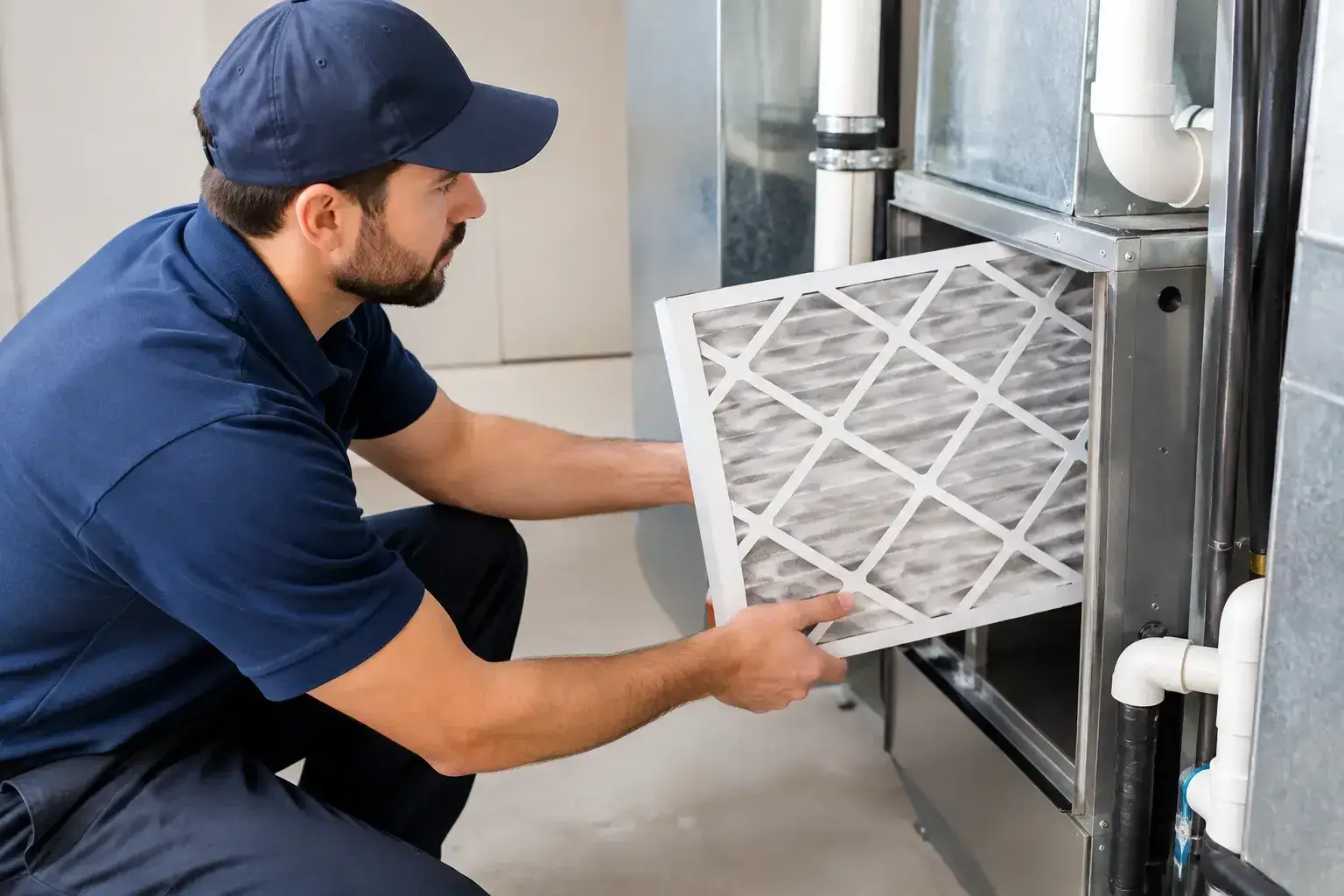
Changing a furnace filter seems like a small job until the furnace runs nonstop, rooms heat unevenly, or a cold Toronto night exposes a problem that started with restricted airflow. The filter is the first line of defence for your heating system. It keeps dust, debris and airborne particles out of parts that need clear airflow to work properly.
For homeowners, landlords and property managers, regular filter changes are one of the simplest ways to keep a home comfortable and avoid needless strain on the furnace. For businesses, more is at stake. A neglected filter can mean uncomfortable work areas, customer complaints, extra service calls and downtime when you need heat most.
What a furnace filter does
Your furnace draws air from the house or building through the return ducts, passes it through the filter, heats it and sends it back out through the supply vents. The filter catches particles before they reach the blower motor, heat exchanger and other internal parts. Once it’s loaded with dust, pet hair, construction debris or other dirt, air can’t move freely.
That restriction makes the furnace work harder to deliver the same heat. You may notice weaker airflow from the vents, longer heating cycles, more dust around the house, or rooms that never reach the thermostat setting. In bad cases, restricted airflow makes the furnace overheat and shut itself off for safety.
A new filter won’t fix every heating problem. It won’t repair a faulty igniter, a failing blower motor, a damaged heat exchanger or a thermostat fault. But it removes one common cause of poor performance and gives a technician a cleaner starting point if diagnostics are needed.
How often to change a furnace filter
No single schedule fits every property. It depends on the filter type, the system, how often it runs and what’s going on in the building. A one-inch disposable filter in a busy home with pets may need changing every one to three months. A thicker media filter can last longer but still needs regular checks.
A condo with one person and no pets will need a different schedule than a detached house with kids, pets, a renovation underway and a furnace running through a long Ontario winter. Commercial buildings vary just as much. A shop with the door opening all day, a dusty warehouse and a busy office each put different demands on their filters.
Instead of going only by the calendar, look for signs the filter is due:
- It looks grey, matted or visibly covered in debris.
- Airflow from the registers feels weaker than usual.
- The furnace runs longer without making the place more comfortable.
- Dust builds up quickly on surfaces or around vents.
- Allergy or breathing symptoms get worse when the system runs.
If you can’t remember the last time you checked the filter, check it now. A quick look can save you a much bigger hassle later.
Why the wrong filter causes problems
Many people assume the highest-rated filter is always best. It depends. A denser filter catches smaller particles, which can help if you’re dealing with allergies, pets or dust. But a filter that’s too restrictive for your furnace can cut airflow, especially if it isn’t changed often.
The rating, dimensions, thickness and what your system calls for all matter. The size printed on a filter is often a nominal size, and the real dimensions can be a little different. A filter that’s too small leaves gaps around the frame, and one installed backwards against the airflow arrow also works less well.
Call a technician if you’re unsure which rating to use, you keep having airflow problems, or your system takes an unusual cabinet or media filter. You want a filter that cleans the air without making the furnace struggle, not just one that fits the slot.
What a professional filter change should include
A professional filter change is more than pulling out the old filter and sliding in a new one. That part matters, but the visit is also a chance to catch early warning signs before you end up with no heat.
A trained technician can confirm the right filter size and airflow direction, check the filter compartment and the area around it, and look for dirt buildup that could point to duct leaks or overdue maintenance. During a full furnace maintenance visit, they can also check the blower, thermostat, vents, safety controls and other parts that keep the heat reliable.
This helps rental properties and commercial sites the most. A landlord may not know whether tenants change filters properly. A facilities manager may look after several rooftop units, furnaces or air handlers, each on its own filter schedule. A written maintenance routine keeps small jobs from turning into expensive surprises.
Changing it yourself vs. calling an HVAC technician
Changing a standard furnace filter that’s easy to reach is usually a job you can do yourself. Turn the system off, find the filter slot, note the size and the airflow arrow, put in the right filter and make sure the access panel is closed tight. If the filter is easy to get at and the furnace works normally, this is simple routine upkeep.
Call a technician when the filter cabinet is hard to reach, you don’t know which filter to use, the filter gets dirty much sooner than it should, or the heat is still poor after a new filter. Call too if the furnace makes odd noises, keeps turning on and off, smells like burning dust after the first few days of the season, or shows an error code.
Don’t keep resetting a furnace that shuts down. A dirty filter may be part of it, but a safety shutdown has several possible causes. Have an HVAC technician find the reason before the system goes back into regular use.
The cost of waiting too long
Waiting until there’s no heat rarely saves money. A clogged filter makes the furnace run longer and puts extra strain on the blower. That can raise energy use and wear parts out early, though how much depends on the furnace and how blocked the filter is.
There’s a comfort cost too. A family ends up with cold bedrooms while the main floor overheats. A shop has staff working in uncomfortable temperatures and customers who leave sooner than planned. In rental properties, heating complaints turn urgent fast once it gets cold outside.
Regular service can’t promise a furnace will never fail, because parts can wear out with little warning. It does cut avoidable strain, catches developing problems sooner and lets you book repairs on your schedule instead of in an emergency.
Building a filter routine you’ll stick to
The best routine is one people will actually follow. Put the next check on a calendar, a phone reminder or a property maintenance log. Write down the correct filter size, especially if your furnace takes an unusual one. In multi-unit or commercial buildings, make one person responsible for checking and changing filters.
Check the filter at the start of the heating season and again during heavy use. Homes with pets, smokers, renovation work or a lot of outdoor dust usually need more frequent checks. If a filter gets dirty unusually fast, ask why before you just replace it again. Duct problems, return-air issues, heavy indoor dust or a wrongly sized system may be part of the cause.
Expert Heating and Air Conditioning handles furnace maintenance, diagnostics, filter changes and repairs for homes and businesses across Toronto and nearby communities. We can match the right filter to your system and look into problems that go beyond a dirty filter. Check your filter before winter demand peaks, and if the furnace still can’t keep up, book service before a small airflow problem turns into a cold-weather emergency.