
Condo HVAC Repair in Toronto: Your Suite or the Building?
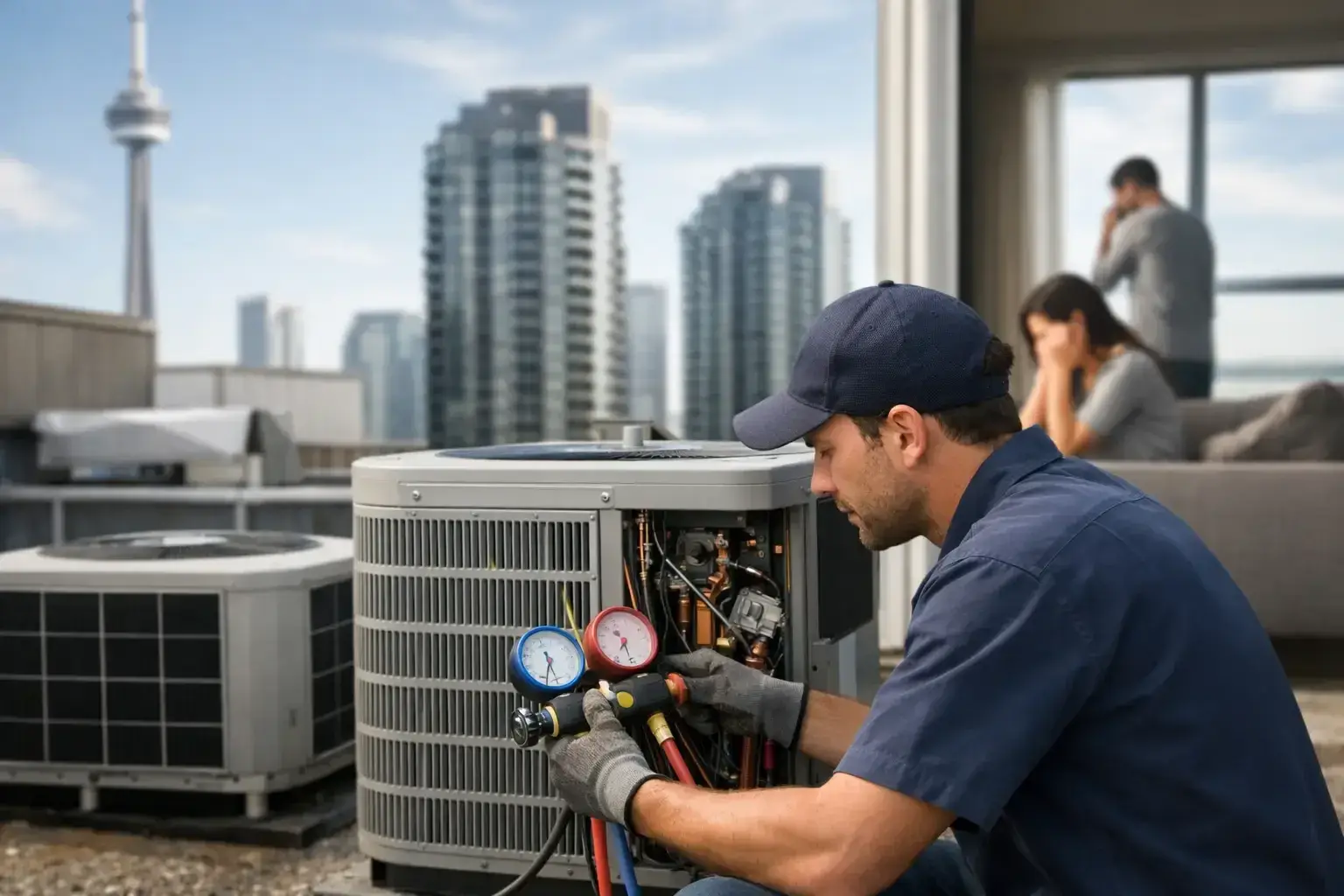
A condo heating or cooling problem rarely shows up at a good time. The suite gets stuffy on a humid July night, the heat stops during a January cold snap, or water appears under the fan coil just before guests arrive. The first job is to work out whether the problem is inside your suite, part of the building’s system, or urgent enough that it can’t wait.
Condo HVAC is different from the furnace and air conditioner you’d find in most detached houses. The equipment in your suite often depends on the building’s systems, and building rules can affect how fast a repair gets done. You still shouldn’t have to put up with an uncomfortable suite or vague answers. The technician needs to diagnose the equipment carefully, explain what they find and work within your building’s rules.
When a condo HVAC problem needs fast action
Some problems can wait for a scheduled repair visit. Others are urgent, especially when they could damage your suite or put anyone at risk. A burning smell, smoke, sparks, a breaker that won’t stay on, or a suspected gas or carbon monoxide problem all call for immediate action. Leave the area if you need to, follow your building’s emergency procedures and call for help.
Water around a fan coil, air handler or heat pump needs quick attention too. A blocked condensate drain, a frozen coil, a failed pump or a leaking connection can damage your floors and walls and the suite below. If it’s safe, turn the system off, move valuables out of the way and tell management or the concierge if your building requires it.
Smaller signs still matter. Weak airflow, rattling, rooms at different temperatures, rising hydro bills, short cycling and a thermostat that seems to have a mind of its own are often early warnings. Dealing with them before the system stops can save you a bigger repair bill.
Why condo repairs have extra steps
A condo suite might have a fan coil fed by the building’s hot and chilled water, an in-suite heat pump, a packaged terminal unit or another setup specific to the building. The unit in your suite may handle air circulation and temperature, while the building controls the seasonal switch between heating and cooling, the central boilers, the cooling towers and the ventilation.
That split matters. If the building hasn’t switched over from heating to cooling for the season, no thermostat setting in your suite will give you air conditioning. If a problem with the building’s water supply is affecting several floors, a repair inside your suite won’t fix it. On the other hand, a failed blower motor, a clogged filter, a faulty thermostat, a broken actuator or a leaking condensate line may be entirely within your unit.
A good technician starts by testing the parts that are in your suite and relevant to the problem: electrical connections, airflow, filters, controls, drain parts, motors and coils, plus operating pressures where they apply. They should find out why the equipment is underperforming before replacing anything, then explain what can be repaired.
Building access is part of the job
Toronto condo buildings often have rules about service elevators, visitor parking, insurance papers, work hours, elevator bookings and notice to management. The property manager may also control access to mechanical rooms and shutoff valves. A repair team that knows condo work can keep things moving, and you can speed things up by checking the building’s rules before the appointment.
If you’re a landlord, tell the technician whether the tenant will be home to let them in and whether management needs notice. If you’re a tenant, report the problem to your landlord as your lease requires, and keep a record of urgent symptoms like leaks or no heat. Clear communication stops a small problem from bouncing between the resident, the owner, the management office and the contractor.
What you can check before calling
A few safe checks can give the technician useful information without risking damage. Make sure the thermostat is set to the right mode and temperature. Check that the breaker hasn’t tripped, but don’t keep resetting a breaker that trips again. Look at the air filter, and replace it only if your unit is designed for residents to do that.
Listen to what the system does when it starts. Does the fan run but blow no warm or cool air? Does it hum without starting? Does it run for a minute and shut off? Those details help narrow down the cause. Note when the problem started, whether it affects every room and whether your neighbours have the same problem.
Don’t remove access panels, open electrical compartments or try to clear drains with homemade tools or chemicals. Condo equipment is compact, and a fix that looks easy can end in a damaged control board, a leak or trouble with the building. A proper diagnosis is usually faster than repairing the damage from a DIY attempt.
Repair or replace?
A broken condo unit doesn’t automatically need replacing. Many problems come down to parts that can be swapped out: capacitors, relays, blower motors, valves, sensors, thermostats, drain pumps and control boards. Original manufacturer parts help keep the fit and performance the unit was designed for.
The real question is whether the repair gives you reliable value. If one part failed, the unit has been maintained and it otherwise runs efficiently, repair usually makes sense. If it breaks down often, has major coil damage, uses parts that are no longer made, keeps leaking, or the repair would cost close to the price of a newer unit, replacement may be the better long-term choice.
Age alone doesn’t decide it. A well-maintained unit can outlast expectations, while a newer one with drainage, airflow or installation problems may need attention sooner. Your building’s specifications matter too. A replacement unit has to fit the available electrical service, the condensate drainage, the cabinet size, the controls and the condo corporation’s rules.
Maintenance keeps small problems small
Condo HVAC maintenance takes more than a filter change. A proper service visit can catch dirty coils, slow drains, weak electrical parts, loose connections, worn motors, wrong thermostat settings and airflow problems before they turn into a no-heat or no-cooling call.
For many owners, seasonal maintenance before the heating or cooling season is a good fit. Owners who rent out suites, and property managers, may do well to plan maintenance across several suites, since fewer emergency calls means happier tenants and less disruption. How often depends on the type of equipment, the filter, pets, the number of people living there and how hard the system runs.
Duct cleaning can help in the right situation, especially after renovations, with visible dust buildup, odd smells or a long gap since the last service. It won’t fix every airflow problem, though. A technician should first find out whether the restriction is in the filter, the blower, the coil, a vent, a damper or the building’s ventilation system.
A clear plan makes a bad day easier
When your suite is too hot, too cold, noisy or leaking, you need to know what failed, what belongs to your suite and what belongs to the building, what the repair involves and which options make financial sense. That’s how Expert Heating and Air Conditioning handles condo calls: we explain what we find in plain language before any work starts.
Keep your management office’s contact details, your equipment’s model information and your past service records in one place. When a problem starts, those details can save real time.